Jake Hooper
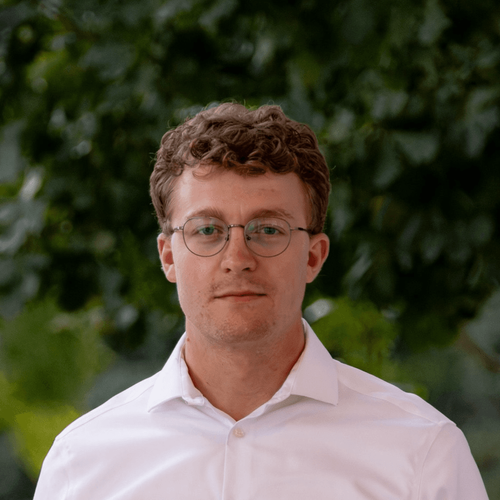
I'm a first-year doctoral student in cognitive systems neuroscience at the University of Oregon, advised by Dr. Margaret Sereno. I study visual perception, neuroaesthetics, and altered states of consciousness.
Previously, I worked as a clinical research coordinator in the CHAOS Lab housed within the Department of Psychiatry at the University of Colorado Anschutz. There, I managed several clinical trials on substance use and cognitive impairment, with a focus on cannabis, and helped expand research into the emerging field of psychedelics.
My current work seeks to integrate neuroscience, psychology, complexity, and aesthetics. I am interested in how the brain interprets specific perceptual information as meaningful and why certain encounters with art, nature, or altered states can feel transformative. A central thread of my work concerns fractal complexity as a bridge between natural patterns, visual art, and psychedelic visual phenomenology. Fractals provide a scalable and quantifiable way to study how the brain balances stability and uncertainty and allow us to probe how perceptual fluency and emotional context interact to shape aesthetic experience. Correspondingly, I am interested in the effects of psychedelics on cognition and consciousness. In the future, I plan to leverage altered states of consciousness to describe mechanisms for constructing aesthetic experience and its numerous scientific and therapeutic implications.
Interests
I am investigating how psilocybin alters perception, emotion, and meaning-making in real time. My current research investigates shifts in the formal features of drawn self-portraits as markers of internal state changes across and beyond a session. Connected lines of inquiry include neuroaesthetic mechanisms, entropy-based accounts of altered consciousness, and how perceptual changes relate to therapeutic or maladaptive trajectories.