Building Trust, Sustaining Art
May 1st, 2026
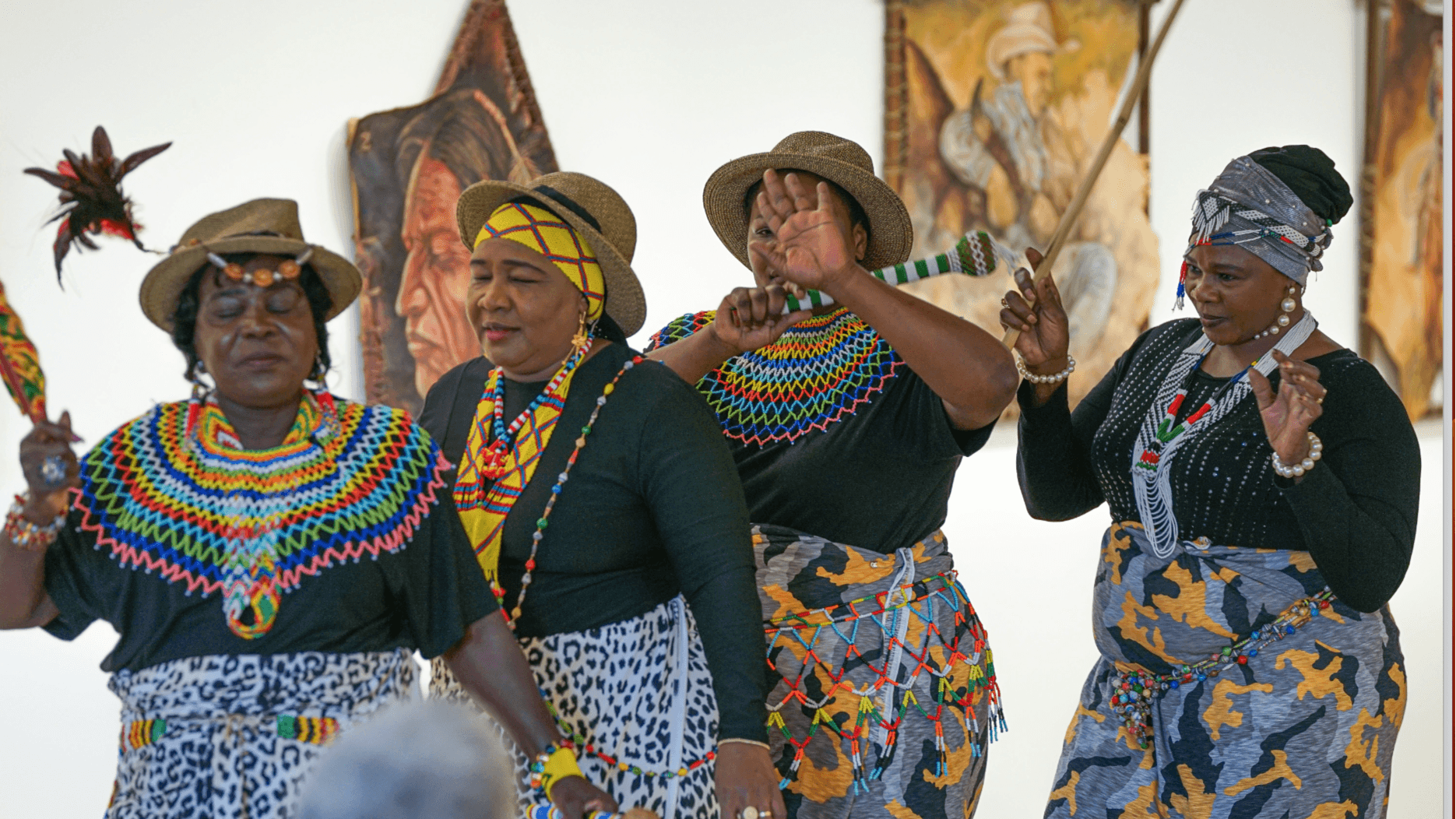
Building Trust, Sustaining Art is a cross-case research report examining how 18 arts organizations rooted in communities of color build trust, sustain their work, and navigate systemic challenges. Drawing on ethnographic research, the report identifies common barriers and recommendations for strengthening the arts ecosystem.
The Social Science Research Council
DOI: https://doi.org/10.59656/A-AO9456.001
Posted bySarah Pearl
Pending staff verification
Notify
Abstract/Description
This report synthesizes findings from the Arts Research for Communities of Color (ARCC) Fellowship, a collaboration between the Social Science Research Council (SSRC) and The Wallace Foundation that paired 18 early-career researchers with 18 arts organizations across the United States. Rather than studying organizations from a distance, researchers worked alongside them to understand their histories, practices, and community relationships, producing both organization-specific case studies and this broader cross-case analysis.
Across the 18 organizations, the report identifies four recurring challenges:
Building trust and legitimacy in communities shaped by historical disinvestment, redlining, gentrification, and institutional mistrust.
Challenging dominant narratives within the arts field that often undervalue culturally specific or community-centered artistic work.
Negotiating definitions of cultural excellence, balancing community-defined values with mainstream standards of artistic recognition.
Balancing local, national, and international identities, particularly for organizations serving diasporic communities while remaining accountable to their local constituents.
The report then explores how these organizations respond through a variety of interconnected strategies. These include building long-term relationships with communities, reframing narratives about artistic value, preserving cultural memory through archives and documentation, investing in staff care and sustainable organizational practices, adopting flexible governance models, collaborating across organizations and movements, and securing or creating community-centered physical spaces. Rather than viewing these as separate initiatives, the report argues that they collectively strengthen organizational resilience and community trust.
A central theme throughout the report is that many of the most important aspects of these organizations' work—relationship-building, education, coalition-building, care work, and community accountability—are often invisible within traditional funding and evaluation systems. The authors therefore recommend greater institutional support that values long-term, relational processes alongside measurable outcomes. They also call for additional research into trust-building, cultural excellence, labor and care, and collaborative networks to better understand how arts organizations rooted in communities of color sustain themselves and contribute to a more equitable arts ecosystem.
Across the 18 organizations, the report identifies four recurring challenges:
Building trust and legitimacy in communities shaped by historical disinvestment, redlining, gentrification, and institutional mistrust.
Challenging dominant narratives within the arts field that often undervalue culturally specific or community-centered artistic work.
Negotiating definitions of cultural excellence, balancing community-defined values with mainstream standards of artistic recognition.
Balancing local, national, and international identities, particularly for organizations serving diasporic communities while remaining accountable to their local constituents.
The report then explores how these organizations respond through a variety of interconnected strategies. These include building long-term relationships with communities, reframing narratives about artistic value, preserving cultural memory through archives and documentation, investing in staff care and sustainable organizational practices, adopting flexible governance models, collaborating across organizations and movements, and securing or creating community-centered physical spaces. Rather than viewing these as separate initiatives, the report argues that they collectively strengthen organizational resilience and community trust.
A central theme throughout the report is that many of the most important aspects of these organizations' work—relationship-building, education, coalition-building, care work, and community accountability—are often invisible within traditional funding and evaluation systems. The authors therefore recommend greater institutional support that values long-term, relational processes alongside measurable outcomes. They also call for additional research into trust-building, cultural excellence, labor and care, and collaborative networks to better understand how arts organizations rooted in communities of color sustain themselves and contribute to a more equitable arts ecosystem.