Does leisure activity matter for epigenetic aging? Analyses of arts engagement and physical activity in the UK Household Longitudinal Study
May 11th, 2026
United Kingdom
Daisy Fancourt, Lehané Masebo,, Saoirse Finn, Hei Wan Mak, Feifei Bu
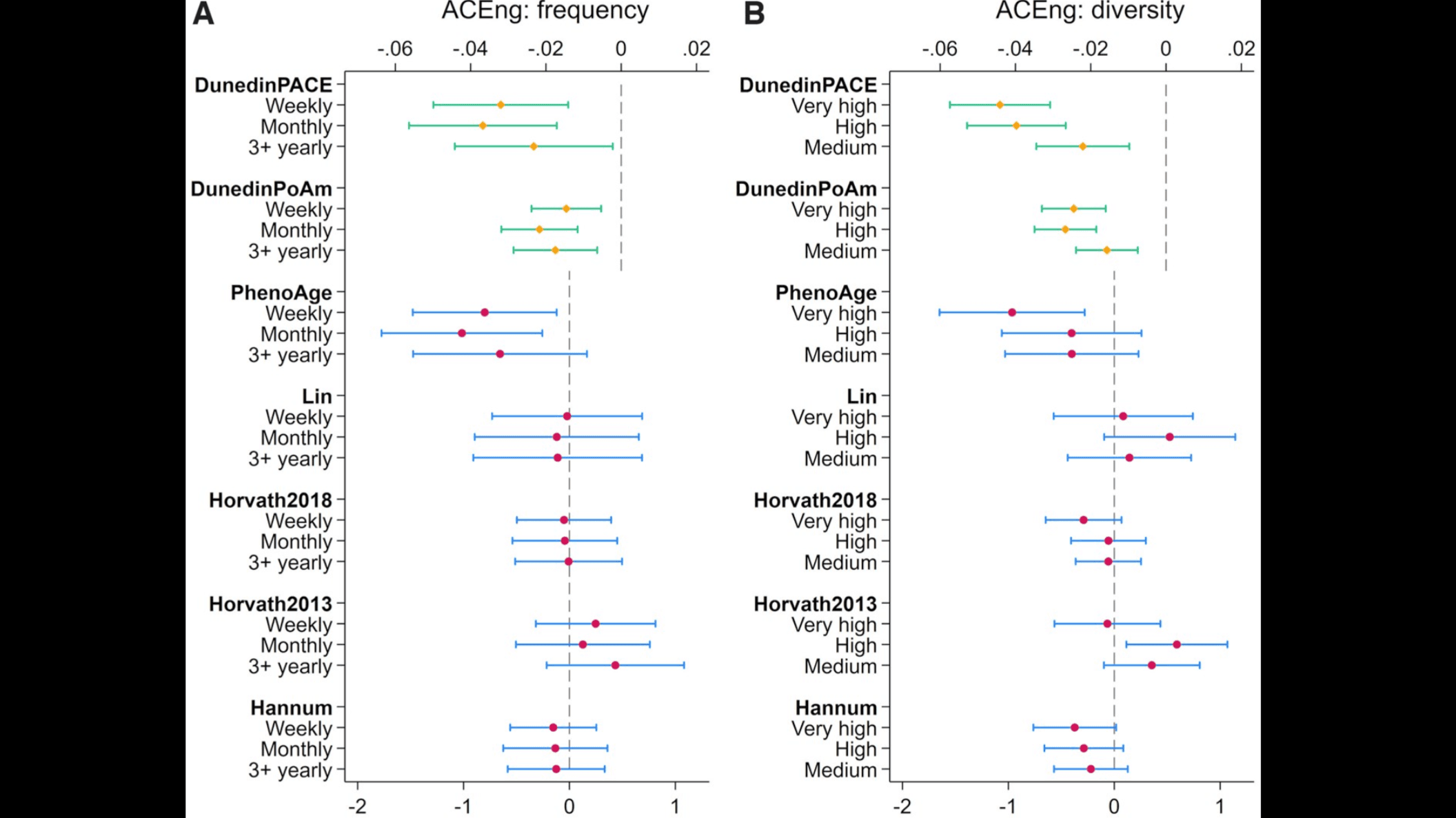
A UK study of 3,556 adults found that frequent and varied arts and cultural engagement was associated with slower biological aging on three advanced epigenetic clocks, with effects comparable to physical activity. Associations were strongest among adults 40 and older, suggesting the arts may be a meaningful, modifiable part of healthy-aging strategies.
Innovation in Aging, Oxford University Press
DOI: https://doi.org/10.1093/geroni/igag038
Posted bySarah Pearl
Pending staff verification
Notify
Abstract/Description
**Study purpose:** This 2026 study examined whether arts and cultural engagement—including creating art, singing, dancing, attending cultural events, and visiting museums or heritage sites—is associated with slower biological aging. Researchers compared these associations with those of physical activity, a more established health-promoting behavior.
**Participants and methods:** Researchers analyzed data from 3,556 adults ages 16–90 in the nationally representative UK Household Longitudinal Study. They assessed both the frequency and diversity of participants’ arts engagement and physical activity, then compared these behaviors with seven DNA methylation–based “epigenetic clocks.” These clocks estimate biological age or the pace at which the body is aging.
**Main findings:** More frequent and diverse arts engagement was associated with slower aging on PhenoAge, DunedinPoAm, and DunedinPACE—newer clocks designed to reflect health, disease risk, and the pace of biological aging. The size of these associations was comparable to that observed for physical activity. For example, monthly and weekly arts engagement was associated with a PhenoAge approximately 0.8–1 year younger than that of people participating only once or twice annually.
**Importance of variety:** The findings suggest that diversity may matter as much as frequency. Participating in several kinds of artistic and cultural activities may expose people to a broader combination of cognitive stimulation, creativity, social connection, sensory experiences, identity development, and stress-buffering resources.
**Age differences:** Associations were generally stronger among adults ages 40 and older, when biological aging may begin to accelerate more substantially. This suggests that arts and cultural participation could be especially relevant during midlife and later adulthood.
**Possible mechanisms:** Arts engagement may influence aging through reduced stress and inflammation, increased social connection, cognitive and multisensory stimulation, and improved cardiovascular or metabolic functioning. These pathways overlap with several mechanisms through which physical activity supports health.
**Differences between aging clocks:** Neither arts engagement nor physical activity was consistently associated with the four first-generation clocks. The researchers suggest that newer clocks may be more sensitive to health behaviors because they incorporate clinical biomarkers, disease risk, mortality, or longitudinal changes in the pace of aging rather than simply predicting chronological age.
**Strengths and limitations:** Strengths included the large population-based sample, seven different epigenetic clocks, detailed measures of frequency and diversity, extensive adjustment for demographic and socioeconomic factors, and a doubly robust statistical method. However, activities were self-reported, unmeasured confounding remains possible, DNA methylation was measured only in blood, and the observational design cannot establish that arts participation directly causes slower aging.
**Overall significance:** This is the first large-scale evidence connecting arts and cultural engagement with epigenetic aging. The results position arts participation as a potentially accessible and enriching health behavior worthy of inclusion alongside exercise in healthy-aging research, public-health strategies, and future intervention studies.