Guest Blog Post: The Power of Music for Young Children
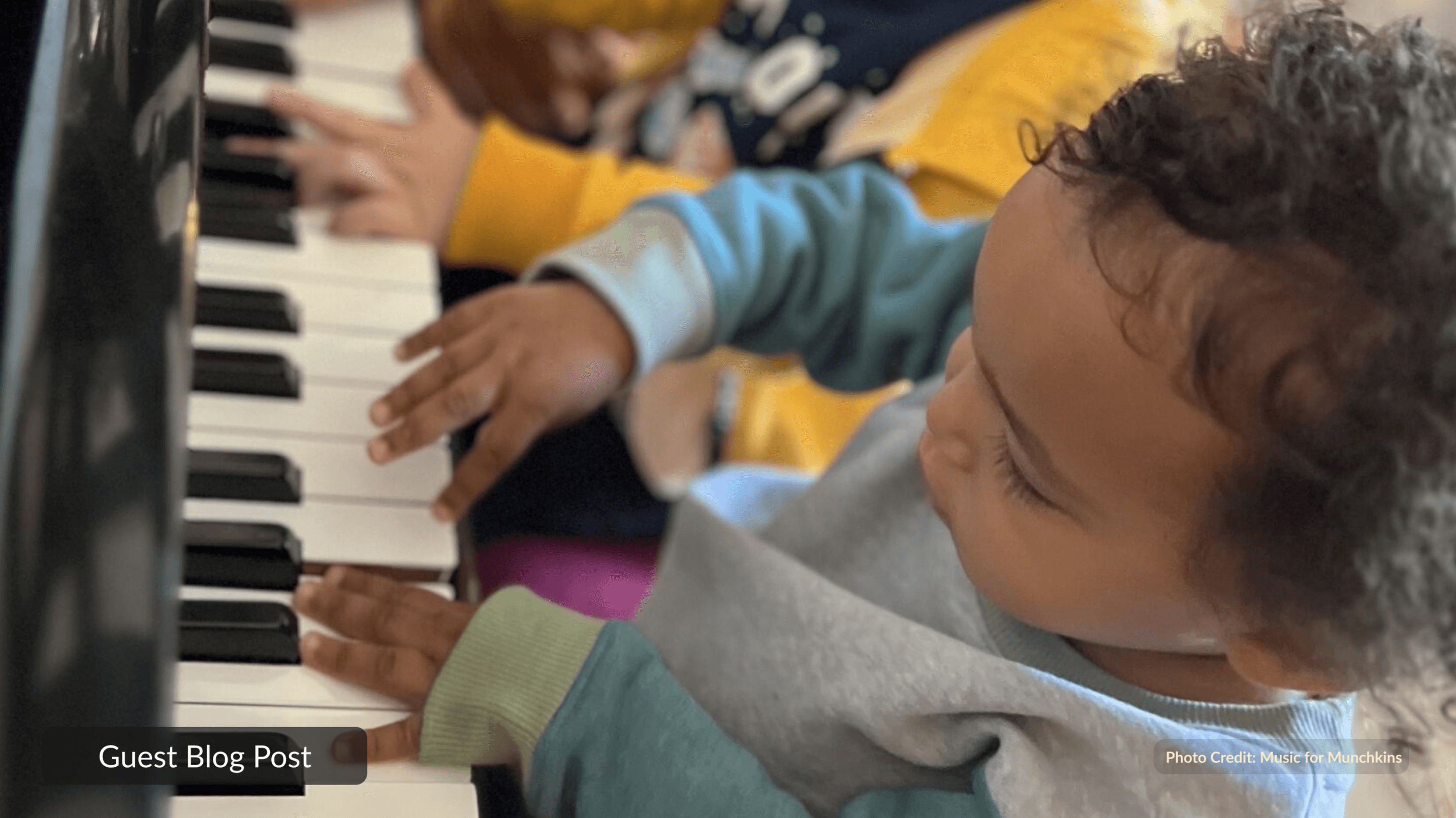
Where Music, Health, and Connection Meet
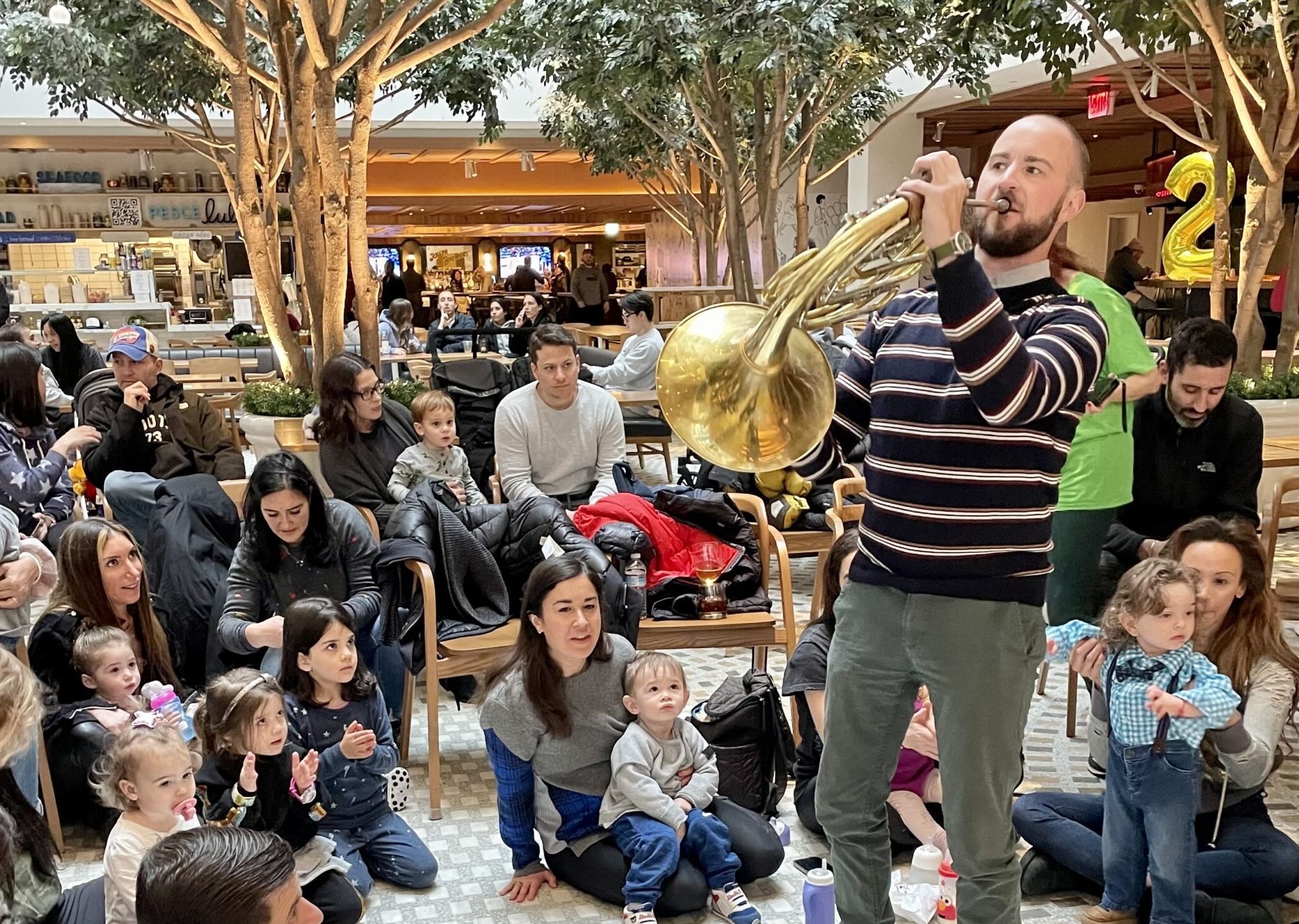 Families gathered around live musicians at a Mozart for Munchkins concert. Credit: Mozart for Munchkins
Music holds a singular place in human experience. A steady pulse can calm a newborn. A familiar melody can awaken memory in a person living with dementia. A choir rehearsal can reduce loneliness in older adults, while a drum circle can synchronize breathing and heart rate among strangers. These moments feel intuitive, even ordinary, yet they reflect a growing body of research showing that engagement with the arts produces measurable benefits for health, learning, and social connection across the lifespan.
The NeuroArts Blueprint defines neuroarts as the integration of the arts and sciences to advance health and wellbeing. That framing resonates deeply with our work through Mozart for Munchkins and our book Resonant Minds: The Transformative Power of Music, One Note at a Time. At the center of both is a shared belief: music is not a luxury or add-on. It is a human capacity that shapes regulation, relationship, and meaning, whether experienced alone or together.
Music as a Pathway to Health and Regulation
Neuroscience helps explain why music is such a powerful entry point. Listening to and making music activates networks involved in emotion, reward, memory, movement, and attention simultaneously. These overlapping activations support emotional regulation, stress reduction, motivation, and resilience. Both anticipation and peak emotional responses to music release dopamine, helping explain why certain songs feel stabilizing or energizing. Singing together lowers cortisol and increases bonding due to oxytocin, even among people who have just met.
Clinicians have long recognized these effects in practice. Melodic Intonation Therapy supports language recovery after stroke. Singing helps a stuttered thought become a fluid sentence for someone with dysfluency. Rhythmic auditory stimulation improves gait and balance for people with Parkinson’s disease. Music interventions reduce anxiety before medical procedures and lower perceived pain. What families experience intuitively—music’s ability to settle the nervous system and create shared emotional space—continues to be validated across clinical settings.
Learning, Attention, and the Developing Brain
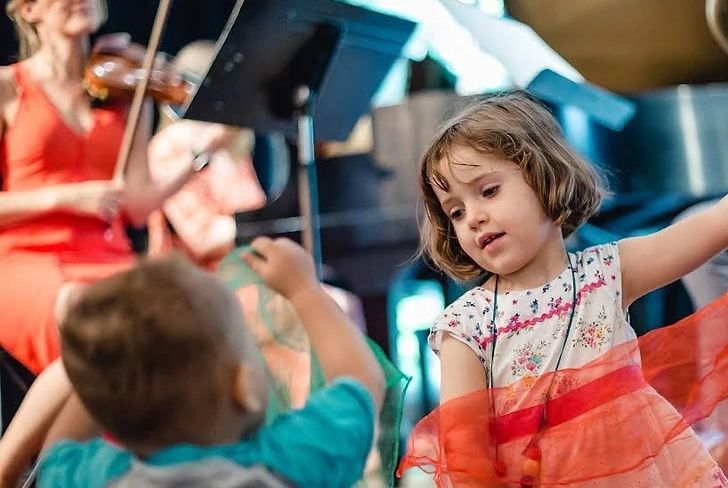
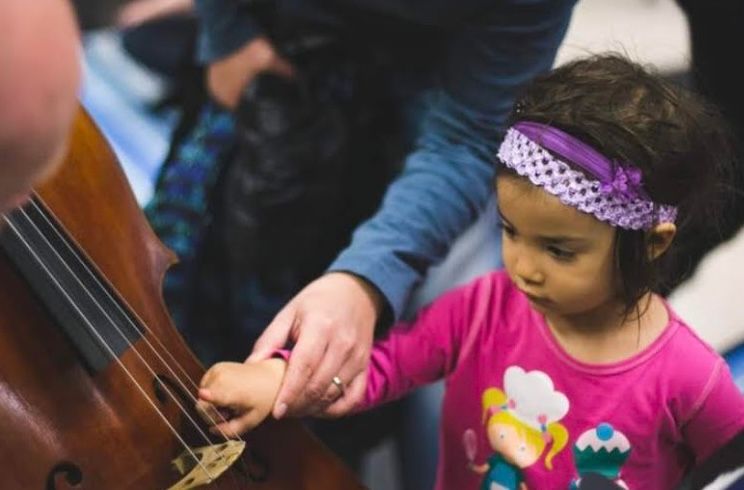 Children and caregivers engaged in movement and attentive listening. Credit: Mozart for Munchkins
In education, music offers similar benefits. Musical engagement supports executive function, including working memory, cognitive flexibility, and attention regulation. With intention, music can be a tool to create a positive habit, like brushing teeth or riding a bike, and educators can use this musical tool for transitions in the classroom, bonding, or a cue for a time of day. Other studies show that music supports empathy development and emotional awareness. Music is especially effective at evoking autobiographical memory, helping people process identity, emotion, and meaning.
These findings matter for schools navigating rising stress, attention challenges, and diverse learner needs. Arts integration strengthens not only engagement but also collaboration, regulation, and belonging. The keyword is integration–not a new curriculum, not music or art ed, but the simple bite sized tools that teachers can implement throughout the school day to connect to their students. Art as a tool can be a stabilizing force in classrooms—a shared rhythm that supports focus and connection.
A Personal Moment of Resonance
One morning at a Mozart for Munchkins concert, a parent quietly shared that it was the first time all week their family had sat together without screens or urgency. Their child swayed gently to the music. The parent exhaled. No one was being taught explicitly. Nothing needed fixing. Yet something shifted.
That pause—the shared breath, the sense of being held by sound—is what we describe in Resonant Minds as the mindful spark: a moment when attention softens and connection becomes possible. Music is that instant connector, lowering our cortisol levels and groove bringing us just a little bit closer together. These moments occur in concert halls, hospital rooms, classrooms, living rooms, and through headphones late at night. The form changes. The mechanism remains.
Families, Community, and Relational Health
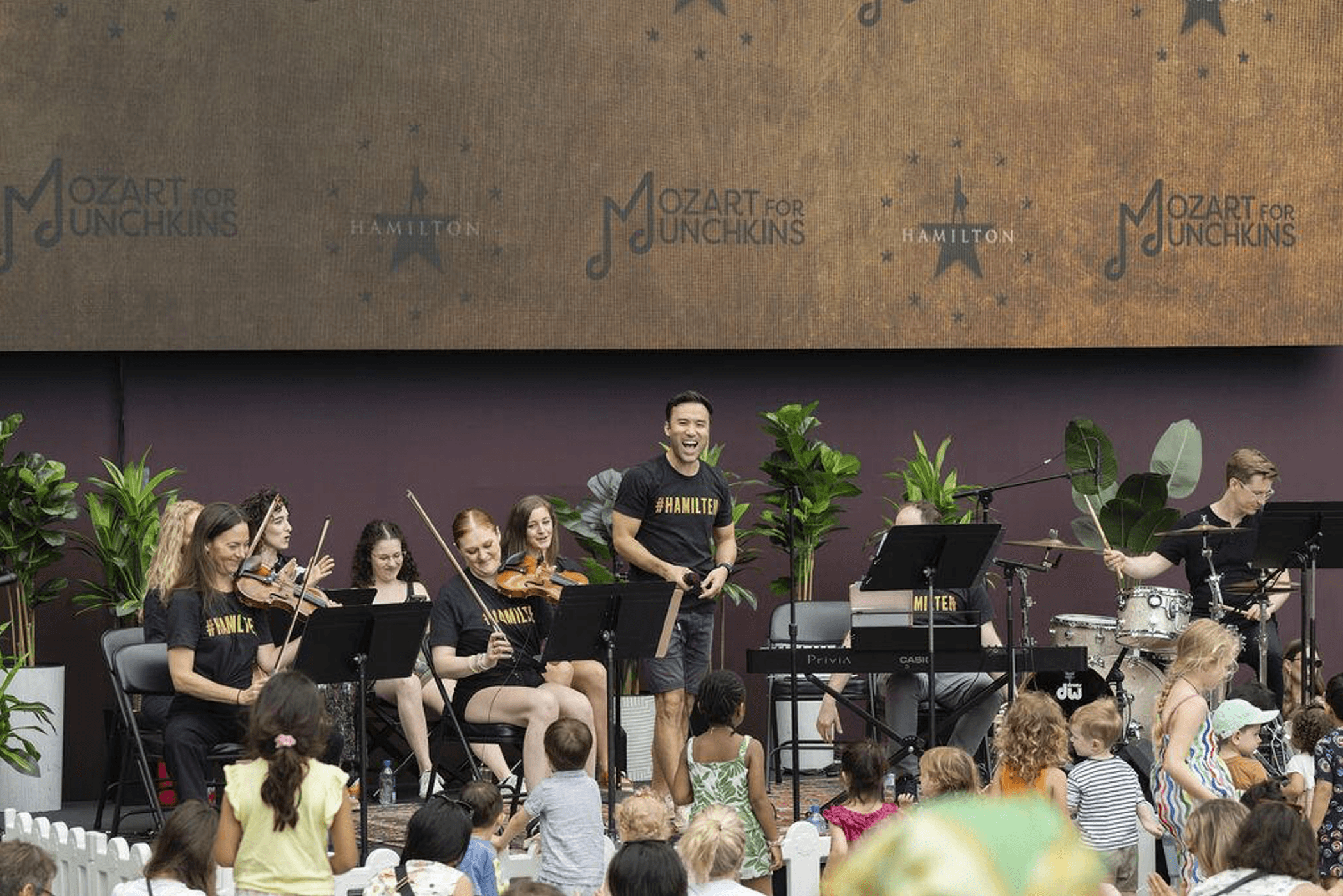 Close-proximity concert setting emphasizing shared attention and participation. Credit: Mozart for Munchkins
Parents and caregivers often witness music creating connection long before language develops. A song redirects frustration. A lullaby eases fear. A familiar tune brings siblings back into sync after a dance party. Music supports co-regulation, communication, and shared joy.
Mozart for Munchkins programs are designed with this relational dimension in mind. The barrier between performer and audience is fluid: musicians walk into the audience, and families sit close — on the floor, in chairs, or dancing to the music. Children of all ages are encouraged to move, listen, sing, and explore. Adults of all ages participate rather than let music wash over them passively. At institutions such as the Museum of Modern Art and Hudson Yards, concerts pairsound with visual art and reflection: draw what you hear, actively think about what sounds bring up certain colors, inviting families to be a part of the performance, rather than just consume. Audience members frequently describe these experiences as grounding, connective, and restorative.
Many Ways of Listening, One Invitation
That invitation is intentional. Live music matters. Proximity matters. Community matters. At the same time, music reaches us through many pathways—music in the grocery store, playlists built for focus or comfort, songs streamed on demand, communal singing, improvisation, and even music created or explored through emerging AI tools. Each mode offers an entry point into regulation, memory, creativity, and connection.
The NeuroArts Blueprint emphasizes that neuroarts is not about privileging one form of engagement over another. What matters most is intention. When sound is used with awareness, it can support wellbeing whether experienced alone or together, live or mediated, human- or AI-assisted.
When families gather around musicians in a shared physical space, something particular happens. Attention synchronizes. Breath slows. The room shifts from audience to community. These moments do not replace other forms of listening or creating. They deepen our understanding of why music works at all—because it invites presence.
Systems-Level Implications
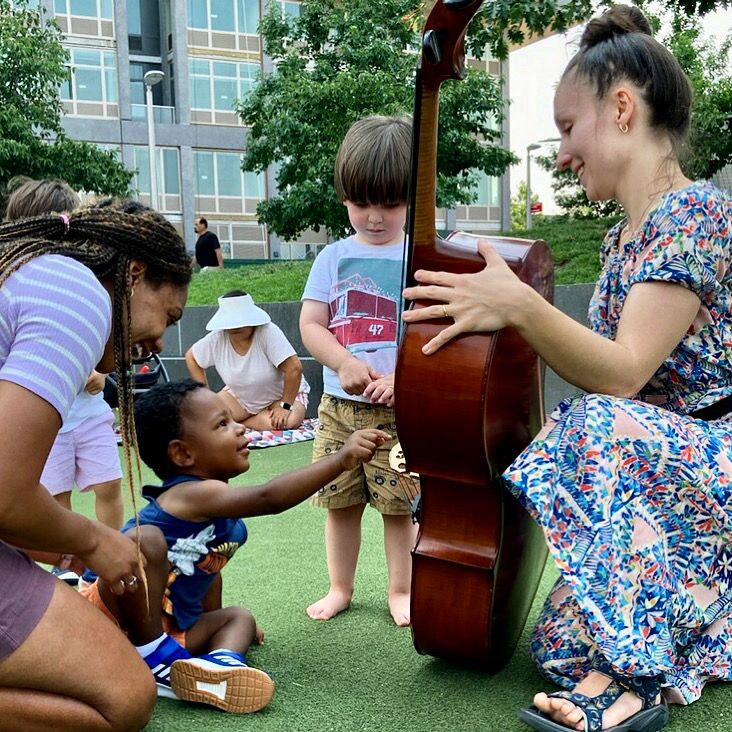
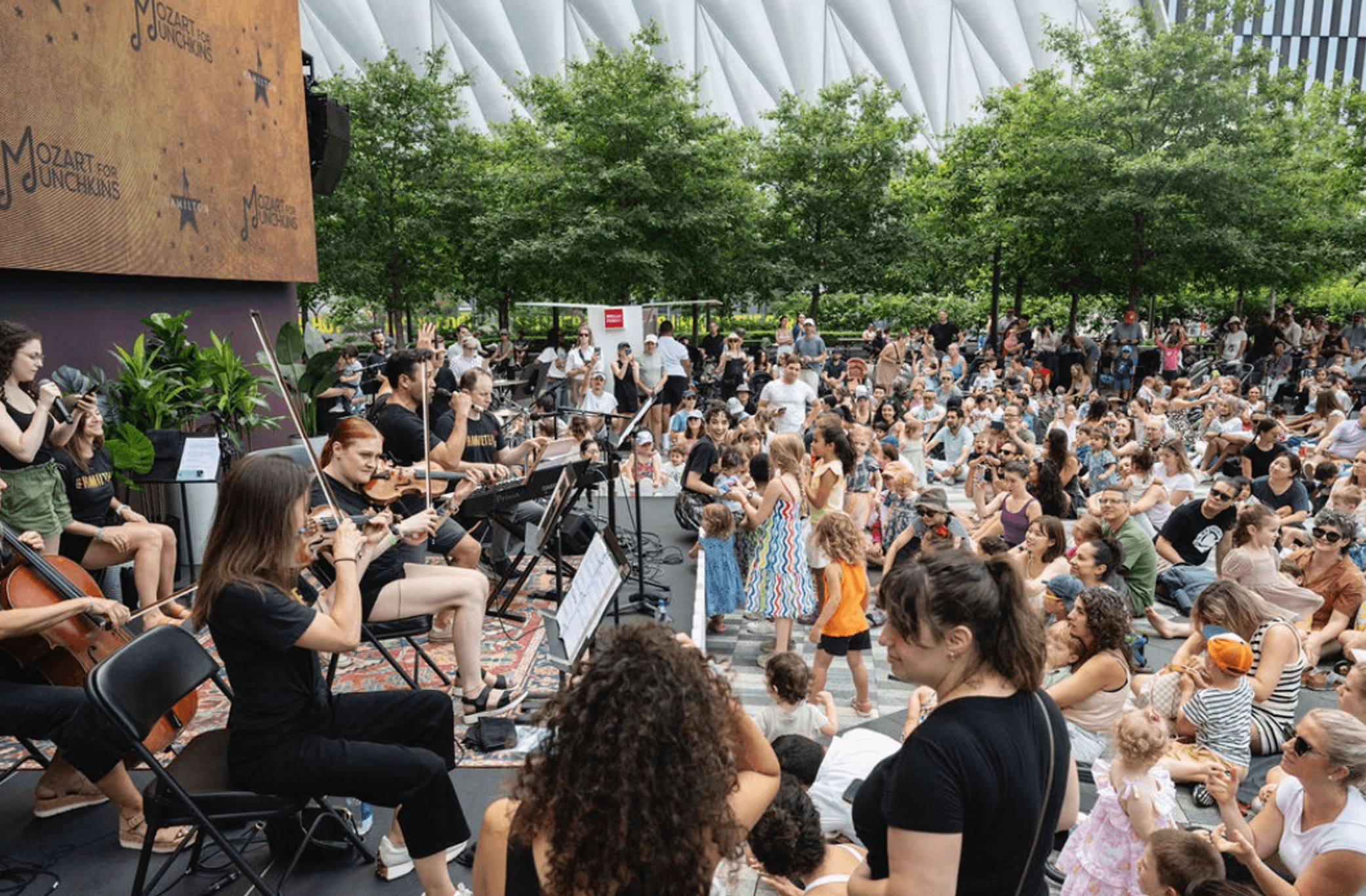 Multigenerational audience members experiencing live music together. Credit: Mozart for Munchkins
For healthcare leaders, this work points toward scalable, low-risk interventions that support regulation, recovery, and relational health. For public health leaders, music offers a tool for prevention, social cohesion, and equity. For education leaders, it reinforces the role of the arts in supporting attention, executive function, and belonging.
The NeuroArts Blueprint, developed by the Aspen Institute and the Johns Hopkins International Arts and Mind Lab, outlines a global strategy for advancing research, access, and implementation. Initiatives such as Sound Health explore the integration of music into healthcare and neurological recovery. Community-based programs continue to demonstrate measurable benefits for mood, inflammation, and quality of life.
Toward Human Flourishing
The neuroarts movement continues to grow because people across disciplines recognize a shared truth. Creativity is essential to wellbeing. Music and the arts are not optional extras. They are foundational to human development, identity, and connection.
Mozart for Munchkins and Resonant Minds contribute to this movement by expanding access to intentional musical experiences for all ages and listeners, bridging science and storytelling, and supporting families and communities in using music as a source of resilience and belonging. Neuroarts thrive at the intersection, where listening becomes connection and sound becomes care.