Guest Blog Post: Straz Center for the Performing Arts
For thousands of years, artists have known that art changes us.
Long before there were brain scans, clinical studies, or evidence-based frameworks, people gathered around stories, songs, dances, rituals, and shared creative experiences. We understood somehow that art helped us make sense of ourselves and our world and each other. It helped us grieve, celebrate, connect, imagine, feel better, and belong.
Today, we have a new lens through which to understand these experiences. Science is providing a new framework for what artists have always profoundly sensed—that art is fundamental to human well-being.
For those of us who have devoted our lives to artistic practice, this moment feels less like a discovery than a validation.
Across more than a decade of conversations with researchers, physicians, and scientists at the intersection of arts and health, I’d sit at the table while others present the research, the data, and the evidence. And I’d wonder, what is my place here on this panel? I’m not a scientist, I’m an artist!
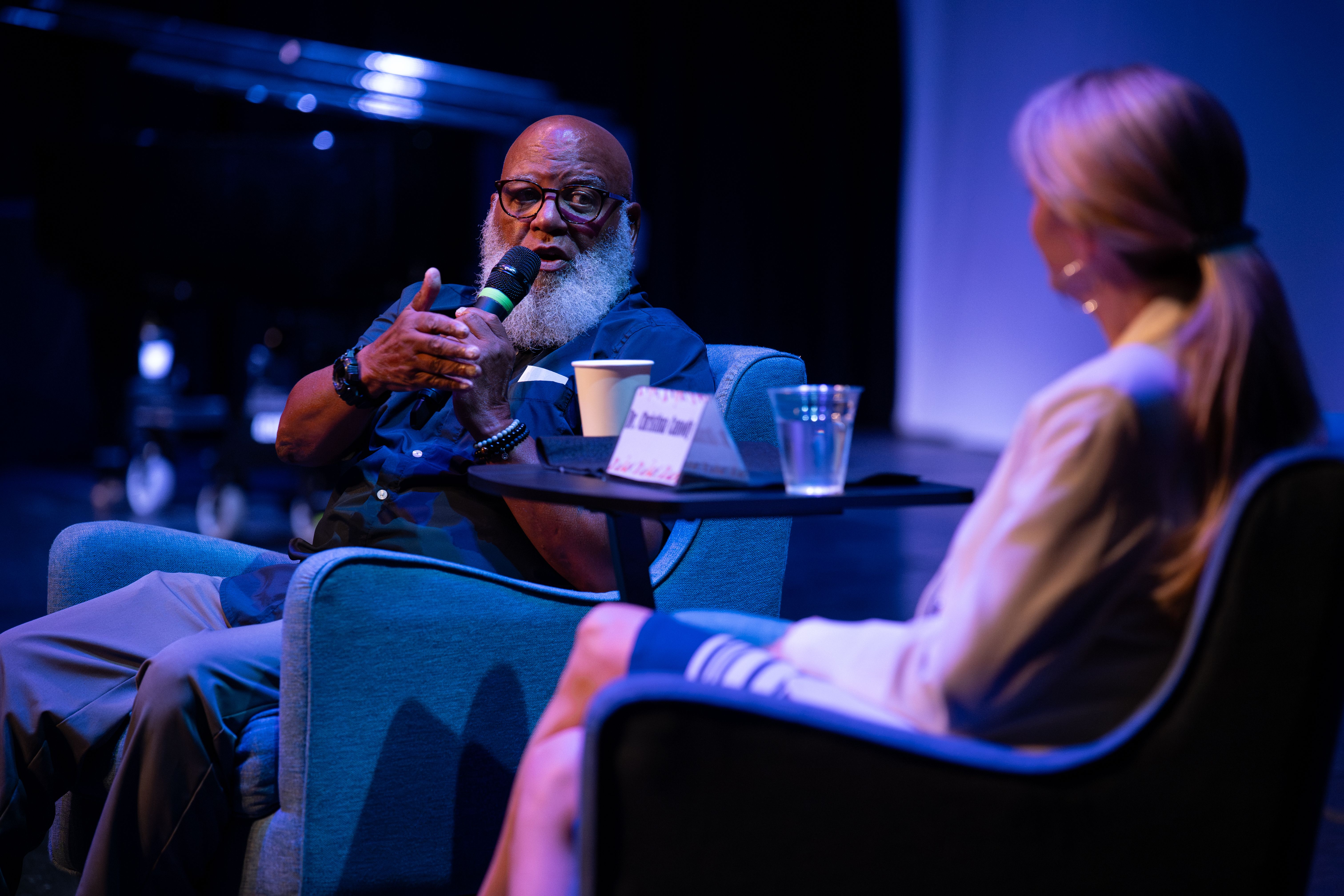 Dr Christina Canody, MD, Medical Director of BayCare Kids in conversation with Fred Johnson at the Third Annual Arts and Mind Village Convening presented by the Straz Center for the Performing Arts in partnership with Johns Hopkins University's International Arts + Mind Lab.Photo credit: FOTOSET by James Leudde
I sometimes joke that I am the closer.
For instance, at one conference, Susan Magsamen and Ivy Ross were talking about their book “Your Brain On Art” to an audience of serious-faced medical professionals and academic researchers. I could see the furrowed brows. I could feel them trying to process the conversation.
I got up, opened the book, and playfully, began to sing it.
As my voice lifts the words from the page, faces transform. Eyebrows go up, people look up and at each other, smiles sneak out. People began to respond, to laugh, to sing themselves. The energy in the room shifts. An experience is created and shared.
I closed the book, and said “THAT is your brain on art.”
Afterward, I heard, "I don't know what happened, but I feel different. I feel great!"
That response matters. People will argue about what they know, but never about what they feel.
Because somewhere between knowing and feeling lies the space where transformation occurs -- where artists create the felt sense.
Science can help us understand what is happening. It can measure physiological responses, track neurological activity, and document health outcomes. These contributions are invaluable.
But artists work in a different domain when we create experiences that move people into that felt sense.
I cannot sing someone into knowing, but I can sing someone into feeling. People will argue about what they know, but never about what they feel.
This raises an important question: When science demonstrates that artistic experiences contribute to personal and public health and well-being, where does that leave the artist? Where does it place the community arts center?
Nonprofit cultural institutions like the Straz Center for the Performing Arts in Tampa, Florida tend to be evaluated through a business lens. Success is typically measured by attendance, ticket sales, and audience growth. The goal, in its simplest form, is to fill seats.
Yet that has never been the primary motivation for most artists.
When I write a song, step onto a stage, or begin creating a new work, I am not thinking about occupancy rates and capacity percentages. I want to be good at my craft and create authentically and have impact beyond entertainment. I am surrendering — letting go — to a creative process that asks for authenticity, vulnerability, curiosity, and trust. Something happens internally. The act of creation also changes me.
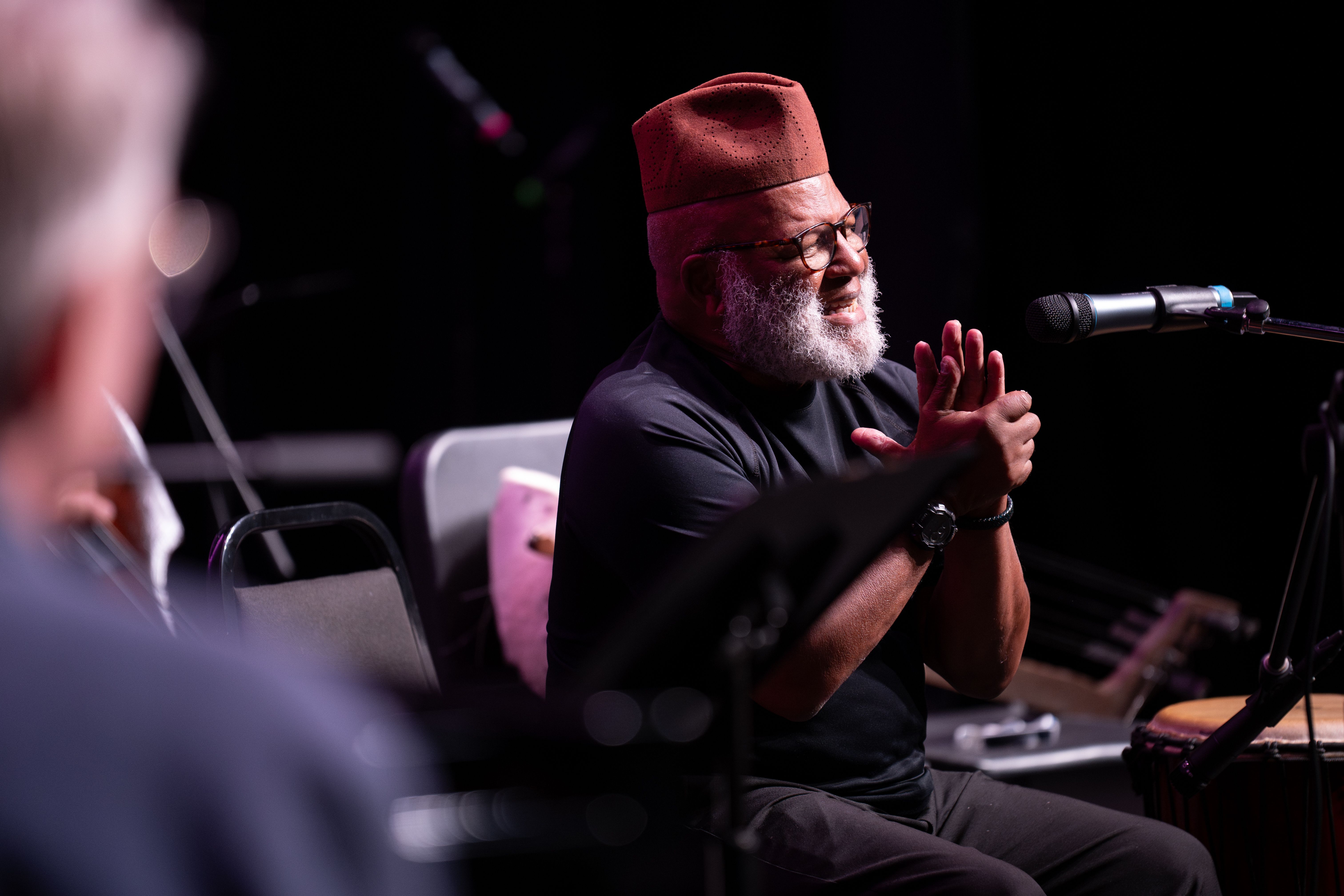 Photo credit: FOTOSET by James Leudde
Every playwright, composer, choreographer, actor, musician, and visual artist understands this experience. We enter a space where logic alone cannot guide us. We surrender, let go. We listen and follow intuition to discovery. There is an alchemy to the artistic process that remains difficult to describe.
What happens neurologically when a songwriter chooses a phrase that will be felt rather than merely remembered? What chemical and emotional shifts occur when an artist enters a state of creative flow?
What excites me most about neuroarts is not simply that it confirms art is good for us. Most artists never needed convincing of that. What excites me is that it expands our understanding of where artists belong.
We are partners in understanding human flourishing. We are storytellers, meaning-makers, and facilitators of connection. We help people access imagination, empathy, wonder, and belonging. We move people from disjointedness toward unity.
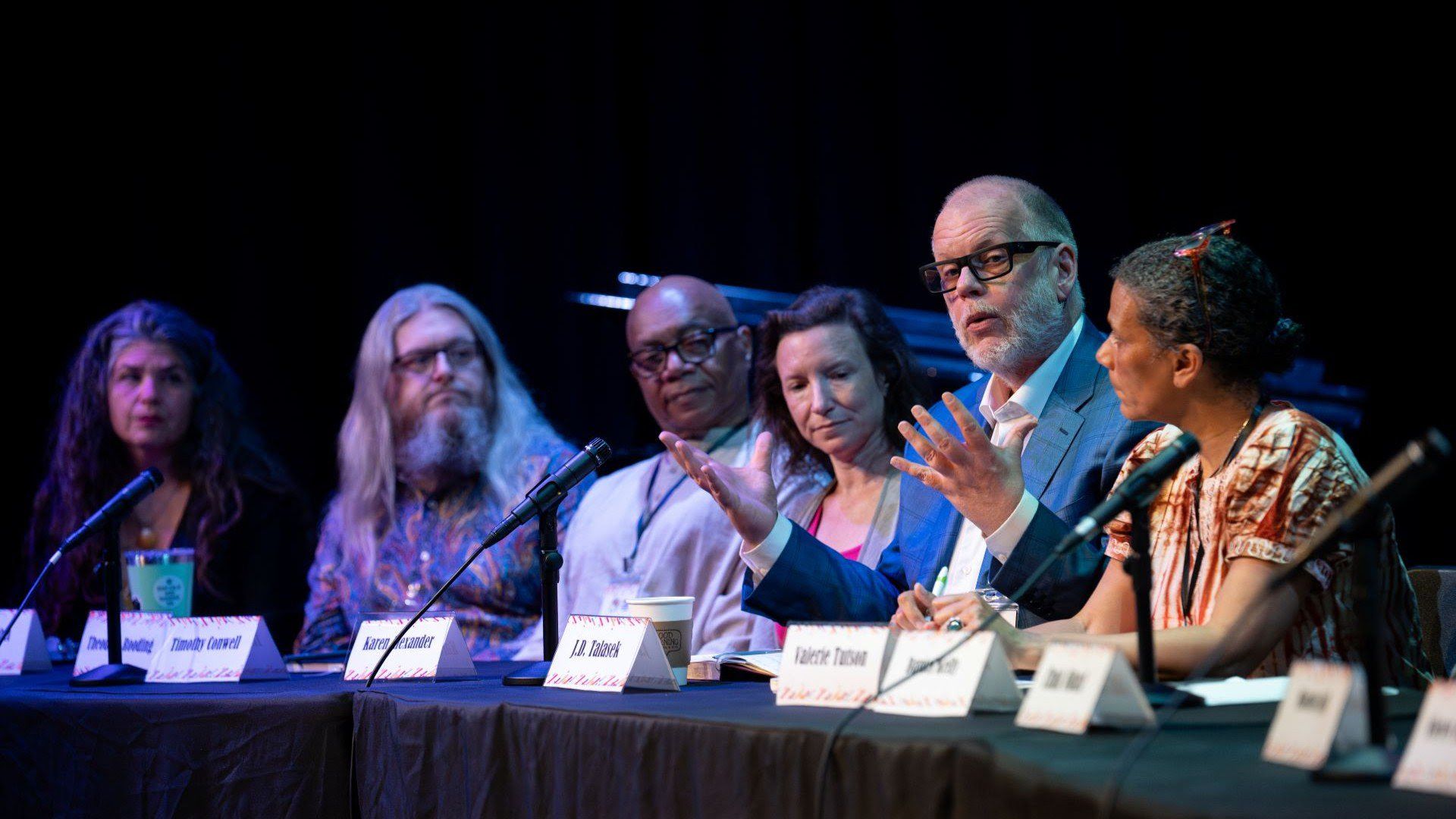 Panelists at the Third Annual Arts and Mind Village Convening. Photo credit: FOTOSET by James Leudde
The work of artists is to design, create and deliver the conditions for felt experience – the felt sense that helps people connect, imagine, and heal. Prescriptive arts is moving this understanding into intentional action. It’s become an important part of my palette, to recognize the medicinal value of my craft.
Like the old saying goes, the longest distance any of us ever travel is the distance between the head and the heart. Artists plot the course, then conceive, design, build and drive the bus.
Neuroarts helps explain why art matters, but also why artists matter. Art is not separate from life. Art is a way of being.
For artists, this represents an invitation to reflect on our work and process, see new applications for our skills and training, and new opportunities to contribute to the well-being of our communities.
For community arts centers, we have an opportunity to reframe our role.
For instance, most folks think of Straz Center as a place to go see a Broadway touring show, an opera, dance or concert performance.
But as Straz Center’s artist-in-residence, I know we are profoundly aware of our responsibility as an arts institution to react in real time to meet needs as we watch our community evolve and face new challenges.
Today, we’re expanding to create more space for art that will be accessible to the public without requiring a ticket. We continue to amplify the ongoing arts and wellness conversation through free performances, workshops, master classes, and events like our annual Arts + Mind Village Convening.
We are still a great place to come experience world-class artistry, but we are also reaching out of the silo to engage in collaborative, cross-disciplinary projects, and devoting resources to the practical application of creativity toward improved health and well-being outcomes.
Sing it with me, now.