In a New Documentary, Artists Get Candid About AI
June 22nd, 2026
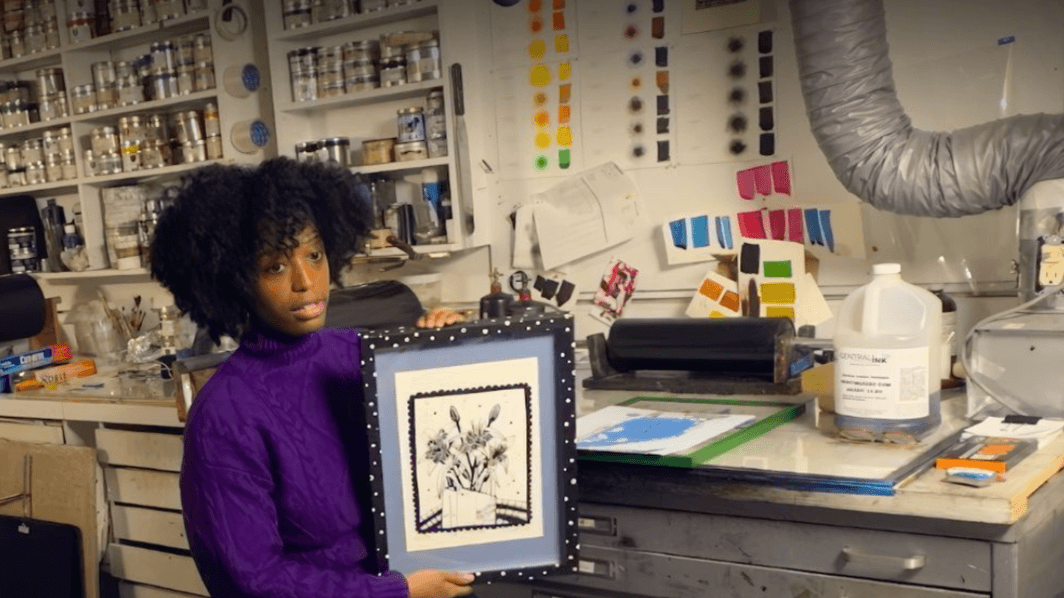
In a new short documentary from the Strategic National Arts Alumni Project (SNAAP), artists get candid about generative technology, sharing their fears, ethical qualms, and real-life experiences. The 19-minute film is based on the 2025 Pulse Survey on AI and Work, which collected responses from over 2,000 postsecondary arts and design graduates across more than 100 colleges and universities.
Hyperallergic
Posted bySarah Pearl
Pending staff verification
Notify
Abstract/Description
What do artists, designers, and cultural workers actually think about artificial intelligence? The conversation around AI and creative work is loud, divided, and still unfolding. To explore this pivotal moment, the Strategic National Arts Alumni Project (SNAAP) is developing a suite of resources bringing data and dialogue together, including a new documentary by filmmaker Jan Oliver Lucks that explores how AI is impacting creative workers. Built on findings from the latest SNAAP Pulse Survey of over 2,000 arts and design alumni on their use and perceptions of AI, the project interviews creative workers from across the field for a conversation about what AI's rise really means for their careers.
Findings:
1. AI use is already common—but not universal
Just over half (51.7%) of creative professionals reported using generative AI in their professional work.
About one-third reported never using AI, either personally or professionally. AI adoption is therefore substantial but far from universal.
2. Most artists are using AI as an assistant—not a replacement
Among those who use AI, the most common applications were:
drafting text
brainstorming ideas
editing writing
summarizing information
Far fewer respondents reported using AI for core artistic production or replacing creative decision-making. Instead, AI was typically described as supporting workflow and productivity.
3. Productivity improved—but financial gains did not necessarily follow
The most frequently reported benefits were:
increased productivity
greater experimentation
ability to explore more types of work
However, relatively few respondents reported:
earning higher fees
obtaining larger projects
significant increases in income directly because of AI
In other words, many artists became more efficient without seeing proportional economic benefits.
4. Concerns remain widespread—even among AI users
More than 80% of respondents expressed concern about:
AI accuracy
privacy and data use
environmental impacts
Interestingly, fear of complete job replacement ranked lower than these concerns.
Rather than believing AI would immediately replace artists, respondents were more worried about:
ownership
ethics
quality
misuse of creative work
long-term changes to professional practice.
5. AI adoption is unequal
One of the strongest conclusions was that AI adoption reflects existing inequalities.
Researchers argue that the central question is not simply "Who will AI replace?"
Instead, they ask:
Who has the time, trust, training, and workplace conditions necessary to make AI useful?
Larger organizations often provide:
AI training
dedicated AI staff
experimentation time
institutional support
Independent artists, freelancers, and smaller organizations frequently lack these resources. Consequently, AI may widen existing disparities rather than affect everyone equally.
6. Different creative fields view AI differently
Acceptance varied considerably.
Higher adoption was observed among professions already reliant on digital tools, such as:
graphic design
architecture
digital media
Lower enthusiasm tended to come from:
illustrators
fine artists
visual artists
These groups more often raised concerns about:
copyright
training data
artistic authenticity
unauthorized use of their work.
7. Authenticity remains central
The researchers argue that AI is changing not only how creative work is produced but also how authenticity is judged.
Creative professionals increasingly distinguish between:
AI assisting routine or administrative work, and
AI replacing the uniquely human aspects of creativity.
Authenticity becomes a social judgment rather than simply a technical question.
8. The biggest impact is organizational—not technological
The accompanying peer-reviewed paper concludes that AI is reorganizing creative labor through three major mechanisms:
Redistribution of work
AI takes over routine or non-core tasks while humans retain higher-level creative judgment.
Changing definitions of authorship
Human and AI contributions become intertwined, requiring new ways of assigning credit and value.
Increasing inequality
Benefits depend heavily on access to training, organizational support, and workplace resources.
Overall Takeaway
The research does not conclude that AI is replacing artists wholesale. Instead, it paints a much more nuanced picture:
-Potential benefits-
Faster workflows
Administrative support
More experimentation
Expanded creative possibilities
-Persistent concerns-
Copyright and intellectual property
Privacy
Environmental costs
Authenticity
Unequal access to AI resources
Limited financial returns despite productivity gains
Findings:
1. AI use is already common—but not universal
Just over half (51.7%) of creative professionals reported using generative AI in their professional work.
About one-third reported never using AI, either personally or professionally. AI adoption is therefore substantial but far from universal.
2. Most artists are using AI as an assistant—not a replacement
Among those who use AI, the most common applications were:
drafting text
brainstorming ideas
editing writing
summarizing information
Far fewer respondents reported using AI for core artistic production or replacing creative decision-making. Instead, AI was typically described as supporting workflow and productivity.
3. Productivity improved—but financial gains did not necessarily follow
The most frequently reported benefits were:
increased productivity
greater experimentation
ability to explore more types of work
However, relatively few respondents reported:
earning higher fees
obtaining larger projects
significant increases in income directly because of AI
In other words, many artists became more efficient without seeing proportional economic benefits.
4. Concerns remain widespread—even among AI users
More than 80% of respondents expressed concern about:
AI accuracy
privacy and data use
environmental impacts
Interestingly, fear of complete job replacement ranked lower than these concerns.
Rather than believing AI would immediately replace artists, respondents were more worried about:
ownership
ethics
quality
misuse of creative work
long-term changes to professional practice.
5. AI adoption is unequal
One of the strongest conclusions was that AI adoption reflects existing inequalities.
Researchers argue that the central question is not simply "Who will AI replace?"
Instead, they ask:
Who has the time, trust, training, and workplace conditions necessary to make AI useful?
Larger organizations often provide:
AI training
dedicated AI staff
experimentation time
institutional support
Independent artists, freelancers, and smaller organizations frequently lack these resources. Consequently, AI may widen existing disparities rather than affect everyone equally.
6. Different creative fields view AI differently
Acceptance varied considerably.
Higher adoption was observed among professions already reliant on digital tools, such as:
graphic design
architecture
digital media
Lower enthusiasm tended to come from:
illustrators
fine artists
visual artists
These groups more often raised concerns about:
copyright
training data
artistic authenticity
unauthorized use of their work.
7. Authenticity remains central
The researchers argue that AI is changing not only how creative work is produced but also how authenticity is judged.
Creative professionals increasingly distinguish between:
AI assisting routine or administrative work, and
AI replacing the uniquely human aspects of creativity.
Authenticity becomes a social judgment rather than simply a technical question.
8. The biggest impact is organizational—not technological
The accompanying peer-reviewed paper concludes that AI is reorganizing creative labor through three major mechanisms:
Redistribution of work
AI takes over routine or non-core tasks while humans retain higher-level creative judgment.
Changing definitions of authorship
Human and AI contributions become intertwined, requiring new ways of assigning credit and value.
Increasing inequality
Benefits depend heavily on access to training, organizational support, and workplace resources.
Overall Takeaway
The research does not conclude that AI is replacing artists wholesale. Instead, it paints a much more nuanced picture:
-Potential benefits-
Faster workflows
Administrative support
More experimentation
Expanded creative possibilities
-Persistent concerns-
Copyright and intellectual property
Privacy
Environmental costs
Authenticity
Unequal access to AI resources
Limited financial returns despite productivity gains