Leonardo, Volume 58, Issue 6: Focus: Artful Minds
December 1st, 2025
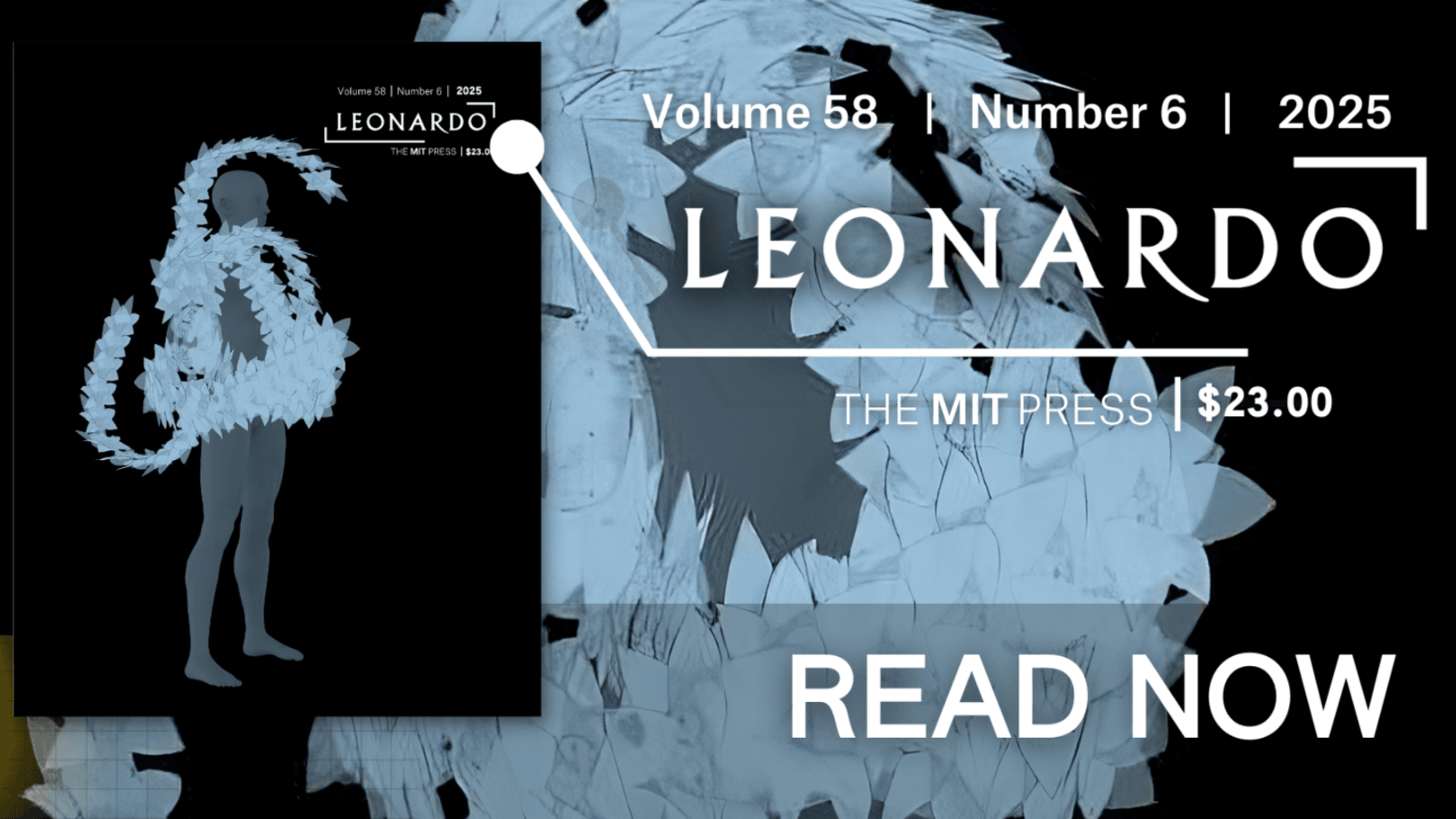
Leonardo from MIT Press, a leading peer-reviewed journal on science, technology, and the arts, has published a Focus Section titled Artful Minds. Guest edited by Susan Magsamen and Dr. Emmeline Edwards, the section explores the impact of rigorous interdisciplinary research advancing the field of neuroarts through a curated set of peer-reviewed articles.
Leonardo
DOI: https://doi.org/10.1162/LEON.e.2547
Posted bySamuel Garrett
Pending staff verification
Notify
Abstract/Description
Welcome to the latest issue of Leonardo Journal. As always, it is our pleasure to bring you a curated selection of pioneering research, inspiring art practices, and thought-provoking research that sit at the vibrant crossroads of art, science, technology, and human well-being. At Leonardo, our mission is rooted in fostering a dynamic platform where disciplines converge, inspiring new trajectories of knowledge that challenge boundaries, ignite creativity, and promote transformative impact.
This issue marks a particularly exciting new chapter in our ongoing exploration of how creative practices intersect with health and well-being. We are delighted to dedicate the Focus Section of this issue to the emergent and rapidly expanding fields of neuroarts and neuroaesthetics—areas that are reshaping our understanding of how visual and performing arts influence the brain, emotions, and overall health. These fields are driven by groundbreaking research, technological advances, and collaborative efforts that are opening new pathways for healing, resilience, and human connection.
We owe a special debt of gratitude to our esteemed guest editors, Susan Magsamen and Emmeline Edwards, whose expertise and vision have been instrumental in shaping the Focus Section Artful Minds. Susan Magsamen, founder and executive director of the International Arts + Mind Lab (IAM Lab) and the Center for Applied Neuroaesthetics at Johns Hopkins University School of Medicine, has been a pioneer in translating neuroaesthetic research into practical, therapeutic applications. Her work champions the profound potential of the arts to enhance mental health, cognitive function, and emotional resilience. Similarly, Emmeline Edwards, former director of the Division of Extramural Research at the National Center for Complementary and Integrative Health (NCCIH), brings a wealth of experience cultivating interdisciplinary research and funding initiatives that support innovative approaches to health and healing. Together, their leadership and insights have curated a compelling collection of contributions that exemplify the transformative promise of neuroarts and neuroaesthetics—fields that are among the fastest growing and most promising in our time.
The response from our community has been truly inspiring—so much so that the volume of submissions for this issue has exceeded our capacity to include everything in a single edition. We see this as a testament to the vitality and relevance of these fields, and we are committed to continuing the conversation through additional online content and future issues. To foster ongoing dialogue and to deepen our collective exploration, we have already issued a call for papers for an upcoming Focus Section, which will examine “Architectures of Care: Inspiring and Supporting Health and Healing.” This forthcoming edition will delve into how physical spaces—hospitals, clinics, community centers—can be designed to nurture not only physical recovery but also emotional and spiritual well-being. Stay tuned for the upcoming call for papers. The Leonardo journey in art and health is just beginning!
In this subsequent call for papers, we will invite contributions from scholars, architects, artists, clinicians, and innovators from diverse disciplines to reflect on how architecture, art, nature, technology, and human touch intersect to create healing environments that nourish the spirit as much as the body. As healthcare spaces evolve amidst rapid technological change and shifting patient expectations, this conversation aims to reimagine the very fabric of our shared spaces of care. Another outstanding collaborator, Leonardo board member Felicia Cleper-Borkovi, will join us as guest editor. Cleper-Borkovi is an architect with specific expertise in medical planning and orchestrating interdisciplinary health design teams and will help explore different directions within this vast and growing topic.
In this issue, you will also find our Showcase section, which continues the theme of holistic healing, focusing on Latin American female creative practitioners. Scholars Claudia Costa Pederson, Gabriela Aceves, and Pat Badani present compelling insights into how art and well-being are intertwined through the work of Latin American women from the 1970s to today. Their projects span a variety of formats—solo works, collaborative endeavors, participatory projects—and traverse diverse environments, from urban to rural, physical to virtual, scientific to artistic. This section underscores the importance of diverse voices and cultural perspectives in shaping our understanding of healing and community.
Furthermore, our Leosphere and Work Bench sections explore a wide array of themes and inquiries beyond health, reflecting the richness and diversity of the Leonardo community. These sections exemplify our commitment to fostering innovative, cross-disciplinary dialogue that sparks new ideas and collaborations across our ecosystem.
We extend our deepest gratitude to our readers—art practitioners, researchers, clinicians, students, and policymakers—whose engagement and curiosity drive the vibrancy of our community. Your dedication to exploring new frontiers of knowledge and practice is what makes Leonardo a vital platform for innovation.
We invite you to immerse yourself in this issue, to reflect on the emerging fields of neuroarts and neuroaesthetics, and to consider how creative expression can serve as a powerful tool for health and healing. We look forward to your feedback, your submissions, and your participation in shaping the future of this dynamic interdisciplinary landscape.
This issue marks a particularly exciting new chapter in our ongoing exploration of how creative practices intersect with health and well-being. We are delighted to dedicate the Focus Section of this issue to the emergent and rapidly expanding fields of neuroarts and neuroaesthetics—areas that are reshaping our understanding of how visual and performing arts influence the brain, emotions, and overall health. These fields are driven by groundbreaking research, technological advances, and collaborative efforts that are opening new pathways for healing, resilience, and human connection.
We owe a special debt of gratitude to our esteemed guest editors, Susan Magsamen and Emmeline Edwards, whose expertise and vision have been instrumental in shaping the Focus Section Artful Minds. Susan Magsamen, founder and executive director of the International Arts + Mind Lab (IAM Lab) and the Center for Applied Neuroaesthetics at Johns Hopkins University School of Medicine, has been a pioneer in translating neuroaesthetic research into practical, therapeutic applications. Her work champions the profound potential of the arts to enhance mental health, cognitive function, and emotional resilience. Similarly, Emmeline Edwards, former director of the Division of Extramural Research at the National Center for Complementary and Integrative Health (NCCIH), brings a wealth of experience cultivating interdisciplinary research and funding initiatives that support innovative approaches to health and healing. Together, their leadership and insights have curated a compelling collection of contributions that exemplify the transformative promise of neuroarts and neuroaesthetics—fields that are among the fastest growing and most promising in our time.
The response from our community has been truly inspiring—so much so that the volume of submissions for this issue has exceeded our capacity to include everything in a single edition. We see this as a testament to the vitality and relevance of these fields, and we are committed to continuing the conversation through additional online content and future issues. To foster ongoing dialogue and to deepen our collective exploration, we have already issued a call for papers for an upcoming Focus Section, which will examine “Architectures of Care: Inspiring and Supporting Health and Healing.” This forthcoming edition will delve into how physical spaces—hospitals, clinics, community centers—can be designed to nurture not only physical recovery but also emotional and spiritual well-being. Stay tuned for the upcoming call for papers. The Leonardo journey in art and health is just beginning!
In this subsequent call for papers, we will invite contributions from scholars, architects, artists, clinicians, and innovators from diverse disciplines to reflect on how architecture, art, nature, technology, and human touch intersect to create healing environments that nourish the spirit as much as the body. As healthcare spaces evolve amidst rapid technological change and shifting patient expectations, this conversation aims to reimagine the very fabric of our shared spaces of care. Another outstanding collaborator, Leonardo board member Felicia Cleper-Borkovi, will join us as guest editor. Cleper-Borkovi is an architect with specific expertise in medical planning and orchestrating interdisciplinary health design teams and will help explore different directions within this vast and growing topic.
In this issue, you will also find our Showcase section, which continues the theme of holistic healing, focusing on Latin American female creative practitioners. Scholars Claudia Costa Pederson, Gabriela Aceves, and Pat Badani present compelling insights into how art and well-being are intertwined through the work of Latin American women from the 1970s to today. Their projects span a variety of formats—solo works, collaborative endeavors, participatory projects—and traverse diverse environments, from urban to rural, physical to virtual, scientific to artistic. This section underscores the importance of diverse voices and cultural perspectives in shaping our understanding of healing and community.
Furthermore, our Leosphere and Work Bench sections explore a wide array of themes and inquiries beyond health, reflecting the richness and diversity of the Leonardo community. These sections exemplify our commitment to fostering innovative, cross-disciplinary dialogue that sparks new ideas and collaborations across our ecosystem.
We extend our deepest gratitude to our readers—art practitioners, researchers, clinicians, students, and policymakers—whose engagement and curiosity drive the vibrancy of our community. Your dedication to exploring new frontiers of knowledge and practice is what makes Leonardo a vital platform for innovation.
We invite you to immerse yourself in this issue, to reflect on the emerging fields of neuroarts and neuroaesthetics, and to consider how creative expression can serve as a powerful tool for health and healing. We look forward to your feedback, your submissions, and your participation in shaping the future of this dynamic interdisciplinary landscape.