Music Therapy with Displaced Persons Trauma, Transformations and Cultural Connections
July 21st, 2025
Elizabeth Coombes, Emma Maclean, Samuel Gracida
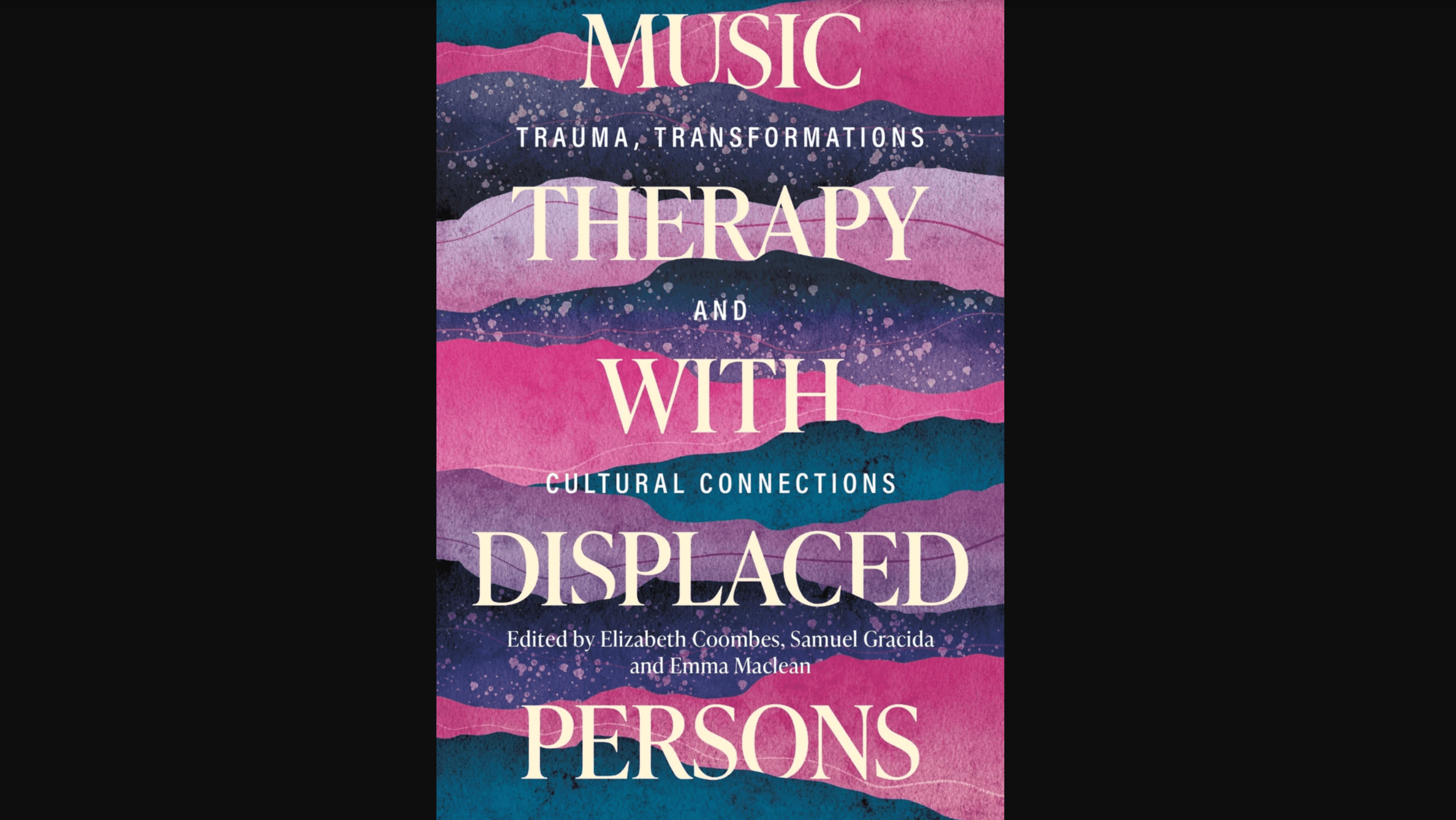
This book examines music therapy with refugees, asylum seekers, and people displaced by war, persecution, and forced migration. It covers trauma-informed and culturally responsive practices using singing, songwriting, improvisation, music and imagery, group music-making, and parent-child sessions to support emotional regulation, identity, connection, and resettlement.
Posted bySarah Pearl
Pending staff verification
Notify
Abstract/Description
This book examines how music and music therapy are used with people displaced within and across national borders. Its contributors address forced migration arising from war, political conflict, persecution, detention, and resettlement, with attention to the psychological, relational, cultural, and practical effects of displacement.
An opening review evaluates literature on music and music therapy with displaced populations published between 2014 and 2024. The book then considers how musical practices may be adapted for trauma-informed work, including the development of safety, emotional regulation, trust, and therapeutic relationships. It discusses the need to avoid treating music as universally safe or meaningful, since songs, instruments, languages, and musical traditions may carry different personal, cultural, and political associations.
Clinical and community examples involve singing, songwriting, improvisation, receptive listening, music and imagery, rhythm, musical play, and group music-making. These practices are considered in relation to post-traumatic stress, anxiety, grief, disrupted identity, isolation, acculturation, and loss of home. The book also examines how familiar music can preserve cultural continuity while newly created music may provide space for expression and adaptation.
The populations and settings represented include Palestinian communities, Syrian refugees, displaced people in Colombia, refugees and asylum seekers in European settings, and people affected by immigration detention in Australia. Chapters address work with children, adolescents, adults, parents, and families. One section examines the Safe & Sound group intervention for refugee and asylum-seeking children, while another considers music and imagery therapy with women experiencing post-traumatic stress during resettlement.
A study of Ukrainian refugee parents and their preschool-aged children considers the feasibility of dyadic music therapy for family mental health and well-being. Parent-child singing, musical play, shared attention, and co-regulation are examined as ways of supporting relationships affected by displacement. The book also addresses community programs involving local training, co-production, cultural exchange, and the development of services that can continue beyond short-term humanitarian projects.
Across these examples, the contributors consider cultural humility, interpreters, power differences, informed consent, practitioner well-being, and the ethics of working in unstable or resource-limited settings. The book distinguishes clinical music therapy from community music activity while also examining areas where therapeutic, cultural, and participatory practices overlap.
An opening review evaluates literature on music and music therapy with displaced populations published between 2014 and 2024. The book then considers how musical practices may be adapted for trauma-informed work, including the development of safety, emotional regulation, trust, and therapeutic relationships. It discusses the need to avoid treating music as universally safe or meaningful, since songs, instruments, languages, and musical traditions may carry different personal, cultural, and political associations.
Clinical and community examples involve singing, songwriting, improvisation, receptive listening, music and imagery, rhythm, musical play, and group music-making. These practices are considered in relation to post-traumatic stress, anxiety, grief, disrupted identity, isolation, acculturation, and loss of home. The book also examines how familiar music can preserve cultural continuity while newly created music may provide space for expression and adaptation.
The populations and settings represented include Palestinian communities, Syrian refugees, displaced people in Colombia, refugees and asylum seekers in European settings, and people affected by immigration detention in Australia. Chapters address work with children, adolescents, adults, parents, and families. One section examines the Safe & Sound group intervention for refugee and asylum-seeking children, while another considers music and imagery therapy with women experiencing post-traumatic stress during resettlement.
A study of Ukrainian refugee parents and their preschool-aged children considers the feasibility of dyadic music therapy for family mental health and well-being. Parent-child singing, musical play, shared attention, and co-regulation are examined as ways of supporting relationships affected by displacement. The book also addresses community programs involving local training, co-production, cultural exchange, and the development of services that can continue beyond short-term humanitarian projects.
Across these examples, the contributors consider cultural humility, interpreters, power differences, informed consent, practitioner well-being, and the ethics of working in unstable or resource-limited settings. The book distinguishes clinical music therapy from community music activity while also examining areas where therapeutic, cultural, and participatory practices overlap.