NeuroArts Expansion: A Framework for Artist-Led Inquiry in Applied Aesthetic Contexts
March 5th, 2026
New York, NY, United States
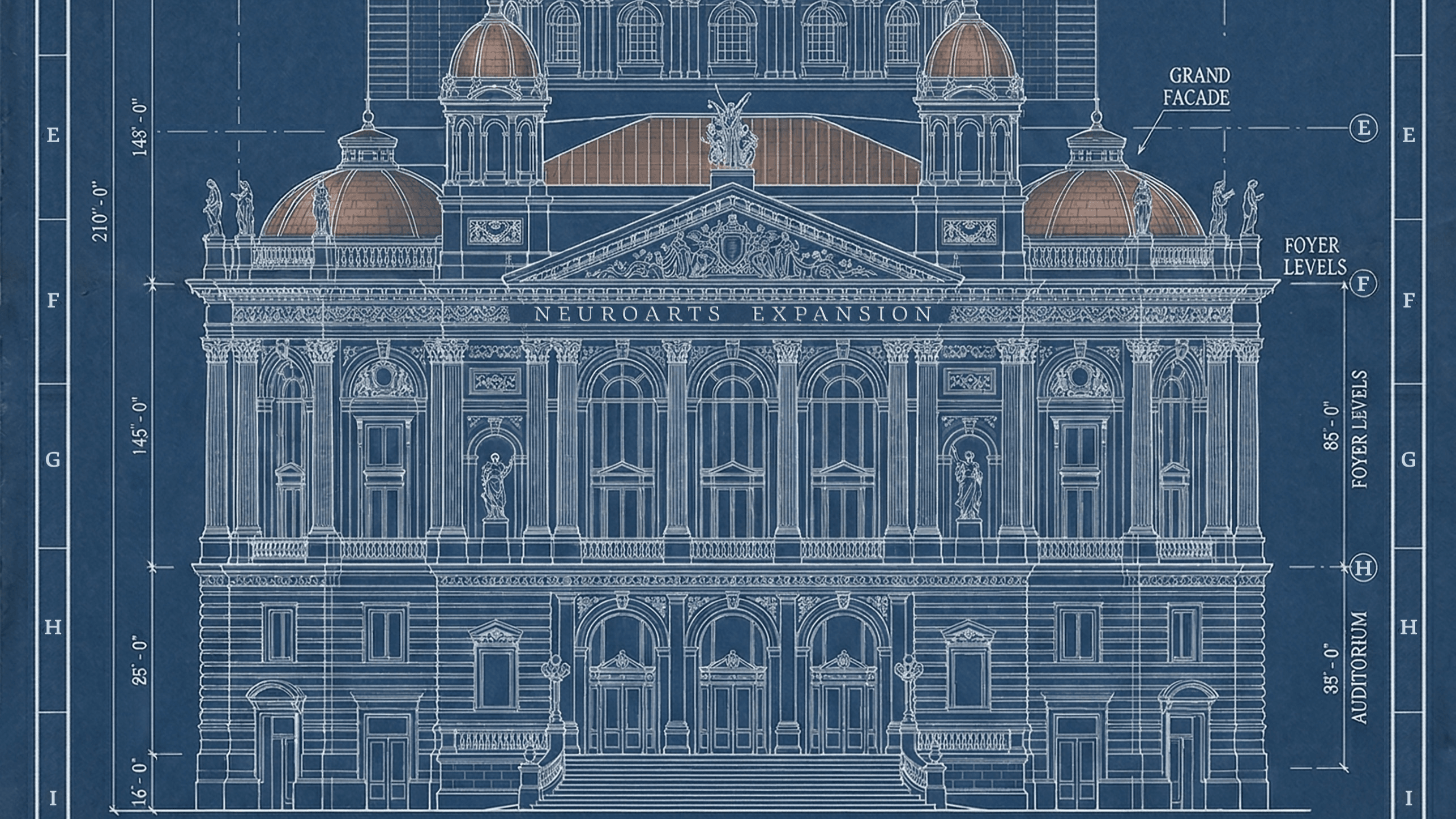
This framework essay proposes an expansion of NeuroArts inquiry through Applied Aesthetic Contexts and Artist-Led Origination (ALO), positioning artistic practice as a generative source of research questions. It serves as the foundational paper of the NeuroArts Expansion Series exploring new interdisciplinary research frameworks.
DOI: 10.5281/zenodo.18875322
Posted byJoseph Stanek
Pending staff verification
Notify
Abstract/Description
NeuroArts research has established that engaging with the arts and aesthetic experiences effectively influences neural processes, emotional regulation, and social behavior, yet much of this work remains centered on controlled laboratory and clinical settings that capture only limited aspects of art’s real-world impact. This framework essay proposes a complementary expansion of the NeuroArts field toward fully realized practice-integrated investigation in Applied Aesthetic Contexts—environments in which aesthetic experiences are intentionally designed and socially embedded. Central to this expansion is Artist-Led Origination (ALO), a model in which research agendas emerge from artistic practice itself, operationalized through Artist-Initiated Inquiry and Practice-Led Inquiry. The framework further advances Reciprocal Embodied Literacy as a foundation for interdisciplinary collaboration grounded in bidirectional experiential competence. To support investigation across extended timescales and populations, the essay introduces ETUDE (Empirical Tracking of Universal Development in Esthetics), a proposed longitudinal measurement infrastructure designed to document how aesthetic engagement shapes cognition, emotion, identity, and social behavior over the lifespan. Together, these components outline a practice-integrated approach that complements existing NeuroArts paradigms by incorporating practitioner knowledge, ecologically valid environments, and population-scale phenomena into the field’s evidentiary landscape.
Keywords: NeuroArts; neuroaesthetics; applied aesthetic contexts; artist-led origination; artist-initiated inquiry; practice-led inquiry; reciprocal embodied literacy; arts-science collaboration; cultural neuroscience; aesthetic experience; longitudinal assessment; ETUDE; NeuroArts Expansion Series
Keywords: NeuroArts; neuroaesthetics; applied aesthetic contexts; artist-led origination; artist-initiated inquiry; practice-led inquiry; reciprocal embodied literacy; arts-science collaboration; cultural neuroscience; aesthetic experience; longitudinal assessment; ETUDE; NeuroArts Expansion Series