Voices from the Field: Aston McCullough
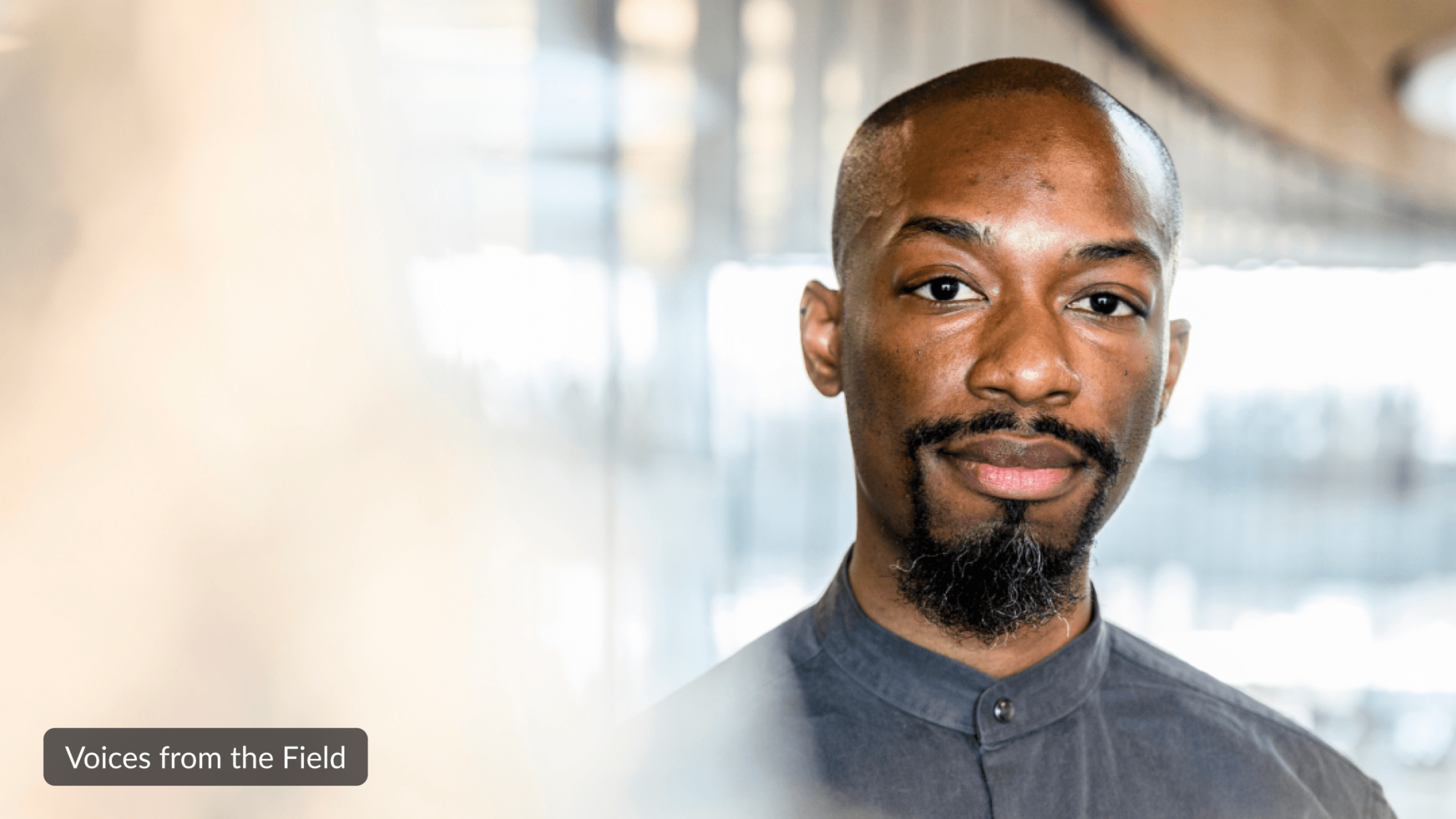
What first inspired you to explore the connection between the arts, health, and/or science?
I have been dancing since childhood, and my love for dance motivated me to continue studying dance more formally at Sarah Lawrence College and Laban Dance Conservatoire. Like so many others who dance, as I have discovered during my studies and while performing, I am always grateful for the ways in which dance changes my experience of the world. When I dance, I find that my relationship to myself, those around me, and the world at large deepens. Dance is always there for me, and it gives me just what I need whenever I open myself up to being moved. There is an indelible quality of intra- and interpersonal resonance that emerges from participating in dance, and so many people who dance feel this way. While completing a graduate degree at New York University (NYU), I completed a master’s thesis on imagination and empathy in the dance classroom in order to begin answering questions about how dance moves people to care about each other and the world. My qualitative thesis at NYU was the beginning of my journey into conducting research, and I’ve been engaged in the process of asking questions and gathering data to answer questions about the benefits of engaging in dance since then.
In your view, what makes the arts and aesthetic experiences uniquely powerful tools for advancing health and wellbeing—and how does your work contribute to translating that potential into practice?
While studying at NYU, I was hired by Joanne Robinson Hill to work in the Education Department at The Joyce Theatre in New York City. It was with Ms. Hill that I was introduced to the tenets of aesthetic education in relation to dance. A few years later, I began graduate work at Columbia University, where I was lucky enough to study the arts and aesthetic experiences with Dr. Maxine Greene. Through observing The Joyce Teaching Artists’ work with hundreds of children in New York City, engaging in long conversations with Ms. Hill about dance and aesthetic education, learning directly from Dr. Greene about aesthetic experiences and encounters with works of art, and through my own teaching as a dance educator, I gained a deeper understanding of the way in which interactions with works of art, as Dr. Greene would say, invite one to see things “as if they could be otherwise”… which was, in part, due to a process she called “lending the work your life.” I remember telling Dr. Greene one day at her home that my studies at Columbia, outside of her class on aesthetics, were focused on the health sciences and applied statistics, and Dr. Greene asked me to tell her more about how imagination would be involved in my science. Since that time, I have continued to ask myself a similar question—how do I conduct rigorous, reproducible scientific research on dance that simultaneously respects the art form and helps more people understand the benefits of dance and its relationship to health and well-being?
What challenges do you see in building a more cohesive and equitable neuroarts ecosystem?
With respect to dance, one of the biggest challenges that my work has focused on is finding ways of quantifying and characterizing such a complex art form. Dance is highly heterogeneous, which makes measuring exposures to dance inherently difficult. At the same time, without good measures for quantifying exposures to dance, it is impossible to answer specific questions about how and how much dance is required in order for someone to see targeted changes in their health outcomes. My research group, along with our collaborators, is developing new methods for quantifying and characterizing dance across populations using qualitative interviews, self-report instruments, wearable sensors, and cameras. Specifically, we are particularly focused on developing algorithms for wearable devices and cameras for quantifying dance across contexts, and then we use data from our algorithms to answer questions about the relationship between dance exposures and health across the lifespan among those with or without prior dance training. Until dance is fully provisioned with an array of robust measures that can holistically capture exposure to dance behavior, the scientific study of dance will be without measures that already exist for researchers studying the benefits of engaging in other art forms.
What kinds of support, collaboration, or infrastructure would most help you expand and/or scale your work? What are existing resources that you have found most useful?
I welcome partnerships with people who are curious about the benefits of dance for health within the context of public health. It would be wonderful to partner with individuals who wish to invest in dance for health, and related sensor-based technologies, as a venture. My collaborators, such as Dance for PD® of Mark Morris Dance Group, are poised to continue to expand upon our research findings in order to benefit a larger number of people. The support of those in venture spaces who are similarly curious about dance, health, and technology would directly expand the impact of these collaborations. The most useful human resource is listening with care—tangible resources scale better when empathetic listening is shared among those in research partnerships. In my collaboration with Wolf Trap Foundation for the Performing Arts, we formalized such a model for listening, and I now take that model into all of my collaborations across diverse sectors.
Looking ahead, what is one bold idea or hope that you have for the future of neuroarts?
Our lab says that everyone is a dancer. My personal goal is for everyone in the world to know that dancing is especially good for your health, and perhaps even better than other forms of activity depending on the health outcome of interest. More than that, I imagine one day living in a world in which one’s knowledge about the benefits of dance for well-being motivates people to dance freely, beyond any resistance that may arise from cultural stigma about being seen dancing, such that if we see someone randomly dancing in public to improve their health and well-being, it would not be interpreted as strange, but instead that it would be seen as an act of self-care… as normal as witnessing someone drink water, take a walk, or listen to their favorite music.
