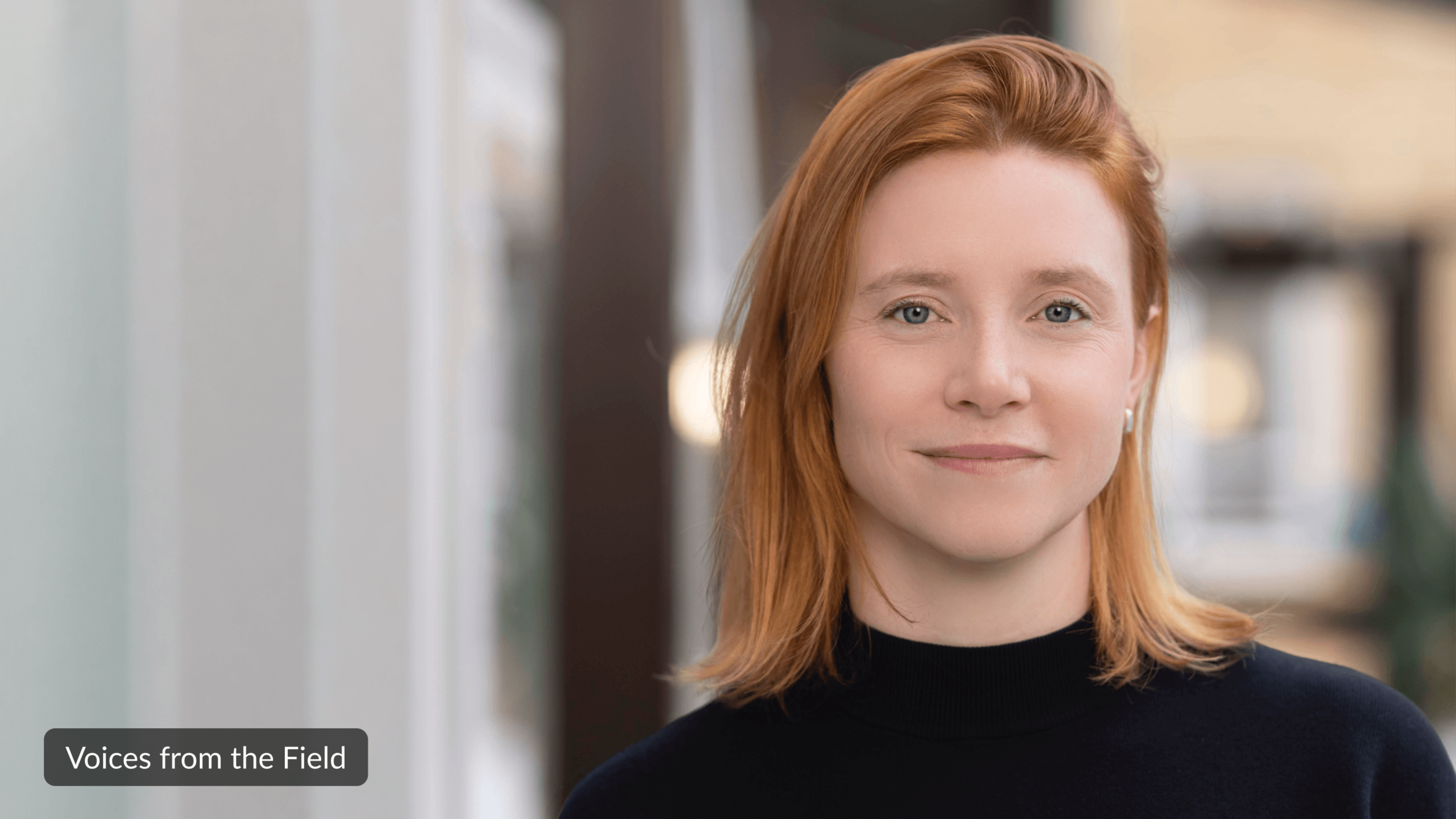
Voices from the Field: Cleo Valentine
What first inspired you to explore the connection between the arts, health, and/or science?
My interest began in neuroaesthetics, shaped by my education in urban systems and architectural theory. I was used to thinking about how cities affect whole populations. Neuroaesthetics brought that interest closer to the individual: how might the experience of a building or a street shape what we feel, how we think, and what happens in our bodies?
Architecture fascinated me because, in many ways, it is an art form we inhabit. Its patterns, proportions and materials become part of our everyday experience. I began to see beauty as a public health question, and to wonder what it would mean to take the aesthetic quality of everyday places seriously as a condition of health.
What drew me further into science was wanting to understand the mechanisms. How might a visual experience become a physiological response? That question led me towards the relationships between perception, stress and immune function, and ultimately to architectural neuroimmunology. It remains the question at the heart of my work: how does the designed world become part of our biology?
What makes the arts and aesthetic experiences uniquely powerful for health, and how does your work translate that into practice?
In public health terms, architecture is a chronic exposure. We encounter the same buildings every day, often with little say in their design, and their visual qualities become part of the conditions of our lives. One aspect of that exposure is visual demand: the work involved in processing what we see. This raises an equity question, because those with the least control over their surroundings may also have the fewest opportunities to escape uncomfortable environments.
The visual system is adapted to the statistical structure of natural scenes, which contain detail across multiple scales. Architectural patterns can depart from that structure, and certain forms of repetition and high contrast can cause visual discomfort. Understanding these relationships helps us investigate how environments can offer richness and interest while remaining comfortable to inhabit. Whether repeated discomfort contributes to the cumulative physiological burden of stress remains a question for longer-term research which I am exploring.
In practice, this means examining the potential effects of aesthetic decisions during design. Changes to spacing, proportion, materials, ornament and colour can be assessed for how they shape visual experience. Scientific evidence can inform these choices while leaving room for creativity, cultural meaning and individual differences. Beauty becomes part of a broader responsibility to create places that support pleasure, comfort and belonging in everyday life.
What challenges do you see in building a more cohesive and equitable neuroarts ecosystem?
One challenge is connecting neuroarts with the aesthetic experiences woven into everyday life. Alongside making music, visiting galleries or participating in arts programmes, people encounter the buildings, streets and objects around them. These experiences are often habitual and involuntary. Bringing them more fully into neuroarts would connect the field to architecture, planning and the everyday conditions that shape health.
Another is developing a shared language without losing precision. Architects speak of proportion, rhythm and character; neuroscientists of perception and physiological responses; public health researchers of exposure and outcomes. Connecting these perspectives requires clarity about what has been measured, what the evidence supports and what remains a hypothesis. Labels such as “neuroscience-informed design” can circulate faster than the research behind them, making that precision essential to the field’s credibility.
Equity must also shape whose environments receive attention and whose experiences count as evidence. People have unequal control over where they live, learn, work and receive care. Social housing, schools and hospitals deserve sustained research, with the people who use them involved in defining priorities and evaluating change. Building an equitable ecosystem means making the benefits of research accessible through ordinary design and investment decisions, especially for those whose surroundings are largely chosen on their behalf.
What support, collaboration or infrastructure is needed, and which existing resources have been most useful?
We need funding that matches the timescales of the questions. Understanding whether everyday design contributes to chronic stress, inflammation or biological aging requires sustained research. Longitudinal studies would allow us to investigate these possibilities while accounting for the many other conditions that influence health.
We also need access to real buildings. Partnerships with architectural practices, clients and communities would make it possible to study environments before and after occupation, bringing physiological measures together with people’s experiences. That would help us understand how findings from controlled studies hold up amid the complexity of everyday life.
Translation needs its own support. Designers need accessible tools and guidance that connect evidence to decisions about form, materials and space. Developing these resources should bring researchers and practitioners into sustained collaboration, with clinicians, public health specialists and the people who will inhabit those spaces helping to shape the questions and assess the outcomes.
What is one bold idea or hope you have for the future of neuroarts?
My hope is that care for human health becomes an ordinary expectation of design. That means considering the whole designed world: the objects, buildings, streets, artworks and experiences we create and live among. Design is a creative act, and an awareness of health can become part of its intention: what each thing we make asks of the people who encounter it, and what it might offer them.
Taking that ambition seriously also means investigating effects that may unfold over years. One possibility is whether chronic stress associated with our surroundings influences how genes are regulated. This remains an open research question, but it invites us to consider how deeply, and over what timescales, the places we inhabit might shape our biology.
I am equally interested in what design can make possible: joy, restoration, curiosity and connection. My hope is that neuroarts help make these experiences more widely available through the places people already inhabit. A school, a waiting room or an ordinary street can all become settings for aesthetic care. The bold ambition is for access to beautiful, engaging surroundings to become a shared expectation of everyday life.