Voices from the Field: Elizabeth Margulis
What first inspired you to explore the connection between the arts, health, and/or science?
When I was a young child growing up in St. Louis, my parents took me to a performance of Handel’s Messiah at Powell Hall. I was too small to understand that standing during the Hallelujah Chorus was a tradition; I thought that people were simply so swept away by the music’s power that they couldn’t stay in their seats. This initial misunderstanding became a seed for lifelong curiosity about music’s capacity to feel transportive.
In your view, what makes the arts and aesthetic experiences uniquely powerful tools for advancing health and wellbeing—and how does your work contribute to translating that potential into practice?
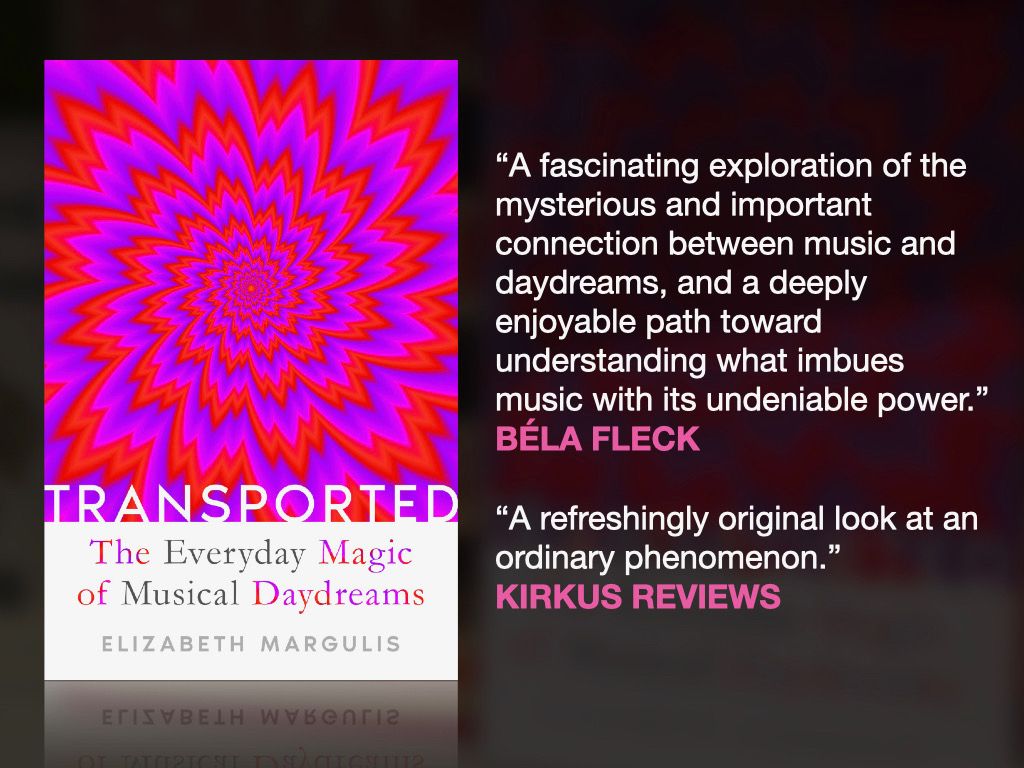
Aesthetic experiences are ubiquitous in a way we don’t often recognize or acknowledge. In Transported: The Everyday Magic of Musical Daydreams, I focus on the commonplace way that music can send us somewhere else, into a memory or imagining. Although we tend to dismiss these experiences as trivial, I argue that they are actually deeply revealing of how our minds work. For conditions like anxiety and depression that can be characterized by stuck thoughts, pressing play on a song provides an extremely low-barrier-to-entry intervention for jumpstarting a different thoughtscape.
What challenges do you see in building a more cohesive and equitable neuroarts ecosystem?
Doing this work well requires textured knowledge in many different fields. We need excellent communicators who can help people understand each other, and convenings that emphasize the importance of responsibly integrating humanistic, scientific, and artistic insight. As a corollary, we also need excellent listeners. This is not a field that you can enter with hubris; there’s too much to learn from too many people. We also need to resist answers and approaches that are too glib. Viewing the arts as a panacea elides some of the complex realities at play, and could in the end undercut real progress in the field.
What kinds of support, collaboration, or infrastructure would most help you expand and/or scale your work? What are existing resources that you have found most useful?
The opportunity to collaborate cross-culturally has been transformative for my own research program. Scholars in the field are increasingly invested in building global coalitions that allow researchers to understand the ways biology and culture intertwine to produce the stunning variety of musical practices that can populate even one individual’s favorite playlist. We’ve also been fortunate enough to collaborate with Princeton University Concerts, a subscription performance series, and with the Humboldt Forum in Berlin to study musical experience in ways that escape the lab.
Looking ahead, what is one bold idea or hope that you have for the future of neuroarts?
I hope that the books that people are writing for the general public intervene in people’s reflexive notions of how science can ethically and rigorously engage with deeply cultural phenomena like the arts. Tools are getting sophisticated enough that we can get interesting, textured answers without artificially reductive research designs. If we can capture the imagination of the next generation, we can ensure that transformative research unfolds across the coming decades, in forms we might now barely be able to imagine!