Voices from the Field: Fred Johnson
What first inspired you to explore the connection between the arts, health and/or science?
A personal experience of feeling across years of being involved in creative experiences – concerts, theater productions – how these experiences shift a room to feel differently after a performance. People who attended might have arrived feeling disconnected, but the experience left them feeling connected, beyond simply an entertainment way.
Creativity has always been a medicine for me. It prompted me to try to understand more profoundly: What is this thing that happens when art happens?
In your view, what makes the arts and aesthetic experiences uniquely powerful tools for advancing health and wellbeing – and how does your work contribute to translating that potential into practice?
They are ancient tools for deeper understanding of what happens to our bodies, our brains, our natural chemistry, when we experience art. The felt sense helps manifest a more profound awareness of how important art is to wellbeing. That foundation is integral to being able to use arts and aesthetic experiences to advance health and wellbeing.
Spaces for performance are one of the few places people agree to collectively gather. The joyful responsibility of expanding the general population’s understanding of the importance of the relationship of art and creativity to wellbeing is one of the greatest contributions of artists and arts institutions.
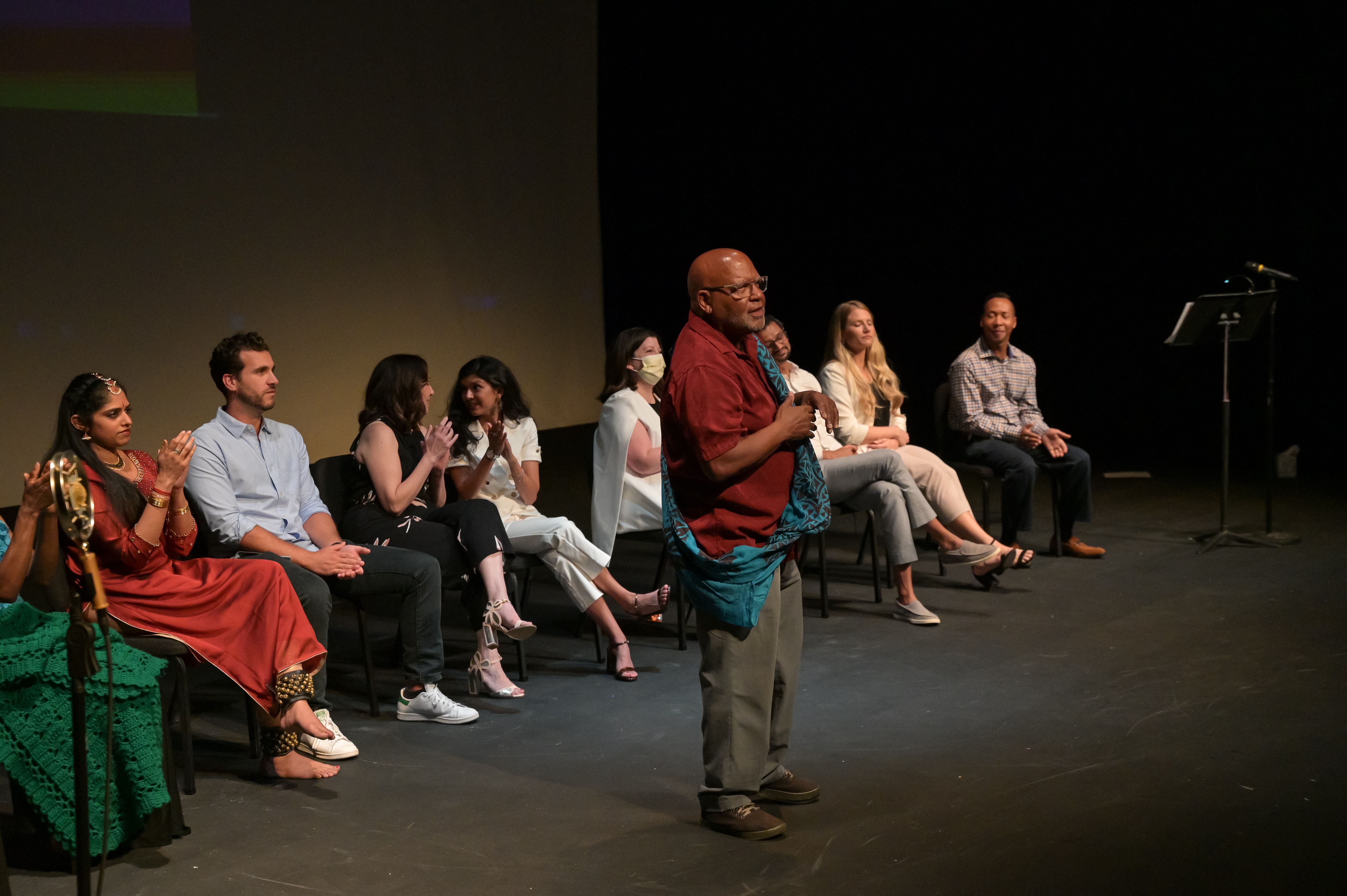 Photo credit: FOTOSET by James Leudde
What challenges do you see in building a more cohesive and equitable neuroarts ecosystem?
To me, the biggest challenge is bridging the gap between knowing and feeling.
The academic knowledge impact of science must be felt. Data and knowledge and creative felt sense are equal strengths. Neither perspective is subordinate to the other.
The entire ecosystem of inquiry strengthens when it is realized between the creative felt sense and the power of knowing. Our greatest opportunity is finding a shared language.
What kinds of support, collaboration, or infrastructure would most help you expand and/or scale your work? What are existing resources that you have found most useful?
The CNC Network is valuable because it creates shared forums where science and art can coalesce; where space is created for sustained inquiry, relationships, experimentation and accumulated knowledge.
Looking ahead, what is one bold idea or hope that you have for the future of neuroarts?
Bringing complex scientific questions into public life through experiences that engage multiple ways of knowing. Bringing the results of inquiry into direct encounter with audiences.
This does not mean using the arts to illustrate science. It is something new generated through the encounter of different ways of knowing. The goal extends beyond communicating information to engage wonder, curiosity, reflection and an ongoing desire to know more.
The objective is not simply to make scientific information understandable, but rather providing multiple entry points to complex ideas, allowing audiences to encounter those ideas through intellect, emotion, sensation and reflection -- to create an experience through which audiences can feel a relationship to the ideas they are encountering.
Information can answer a question. Wonder can cause someone to ask one.