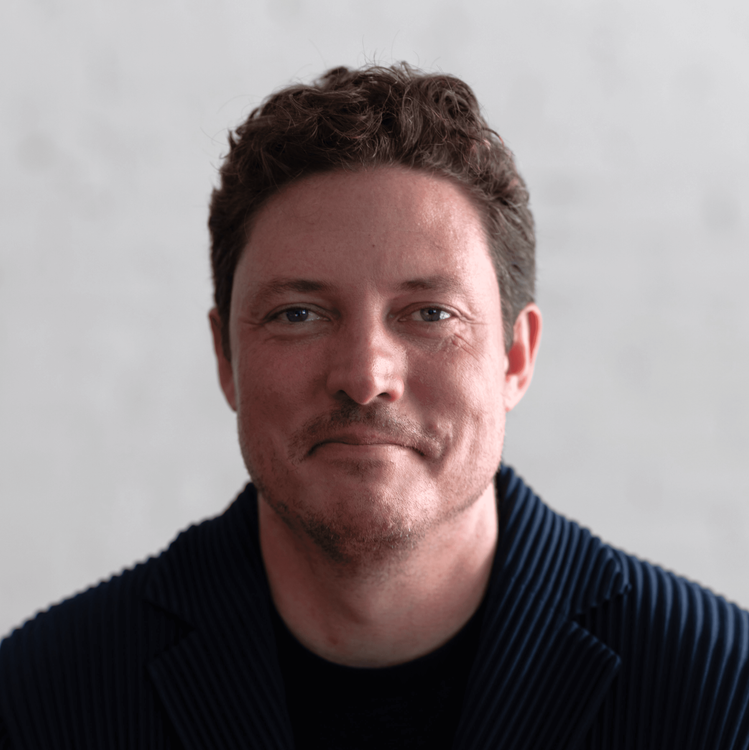
Voices from the Field: Michael Murphy
What first inspired you to explore the connection between the arts, health, and/or science?
My first introduction to architecture was driven by the question of whether a building could actually impact someone’s health. My father’s struggle with cancer seemed to improve based on the work he did fixing our home, and that restoration, that hope, seemed to prolong his life. I wanted to understand how the architecture could have this more transformative power.
The relationship between the artistry of architecture and the health outcomes it could accomplish became elemental to me—and existential. I’ve seen the buildings around us become fundamental providers not just of healthcare, but of our ability to achieve a healthy life. And so my whole career has been attempting to show this to be the case and to prove it real.
The question I am looking at now is around the scientific evidence that our brain health is impacted by the spaces we inhabit, and so neuro-arts is the logical next frontier of understanding how buildings transform us and how that could be designed with more intention.
In your view, what makes the arts and aesthetic experiences uniquely powerful tools for advancing health and wellbeing—and how does your work contribute to translating that potential into practice?
We in the design, art, and aesthetic community must be much more attuned to how we captivate and communicate—not just through text, but through the way space feels, smells, and what we touch. Then there are our hidden senses: proprioception, balance, movement and discovery, and our sense of being and knowing where we are in the world. These known and hidden senses are what the spaces around us shape and what aesthetic experiences impact. Knowing how they act on the brain will help us see the world around us in vivid color.
My friend BJ Miller, a palliative care physician, says it best: At the end of life, we often choose sensory environments—the places where we want to be, to feel better and feel calm. We make those choices every day, rather than choosing only what prolongs life or provides a physiological extension, but not a sensory one.
What challenges do you see in building a more cohesive and equitable neuroarts ecosystem?
I see three fundamental systems challenges in the neuroarts ecosystem.
The first is breaking down academic silos. The current landscape is largely driven by research, but architecture and arts education do not always connect directly to the scientific work required to demonstrate that spaces are transformative. Neuroarts is inherently interdisciplinary, so these fields need to be brought much closer together.
The second challenge is translating research into public understanding. Through the work Susan, Ivy, and others have done, people are beginning to see the value of this research and incorporate it into everyday thinking. But we still need much more education and public literature that makes the science accessible and relevant.
The third challenge is translating knowledge into practice. We need businesses, enterprises, and new initiatives that allow people to experience the benefits of this research in their daily lives. That will require significant investment and a stronger intersection between the academic and the private sector.
Together, those three areas – interdisciplinary research, public understanding, and practical application—are the field-building work ahead of us. They can help make the invisible systems around us visible, including how our environments shape our brains and bodies.
What kinds of support, collaboration, or infrastructure would most help you expand and/or scale your work? What are existing resources that you have found most useful?
We need to incorporate impact-driven financing models that tie the outcomes of the work to the social, environmental, and physical benefits they could produce.
New businesses will be created, new ventures will be started, and new wealth will be developed from the work emerging around brain health, neuro–arts and neuro-aesthetics. The more we can link that growth to social and environmental impacts this will have, the more we can break down the inevitable hierarchies between the haves and the have-nots around access to this work.
This new field work should aim to lift all boats. An impact-driven financing system, along with significant philanthropy and grant funding for academic research, will be critical.
Looking ahead, what is one bold idea or hope that you have for the future of neuroarts?
For me, neuroarts is integrally linked to neuroarchitecture. Neuroarchitecture is both the way our brains are constructed and work, and the way the architecture around us is neurologically defined.
My bold idea is a future in which you can walk into any space and have it revealed to you how that space is impacting you, so that we become much more conscious of the environmental implications of our daily lives. That future is possible. Revealing the invisible systems around us and how they shape our brains and bodies will help us understand not only the architecture around us, but also the spaces in between.
It will help us develop a bigger vocabulary for what we believe in, what we care about, and why. It will expand our aesthetic palette for what we can tolerate, what makes us uncomfortable, and what we are willing to exist within, as well as what gives us solace, patience, and care.
The full gamut of those environments will only be turned up if we understand how much they are shaping us—not turned down or equalized into a banal series of spaces that do very little, do no harm, and do no good, but developed into environments that can actually transform us for the better - to be more alive.