Your Creative Brain and AI: How We Learn and Consciously Experience Art, Music, and Meaning (1st Edition)
January 2nd, 2026
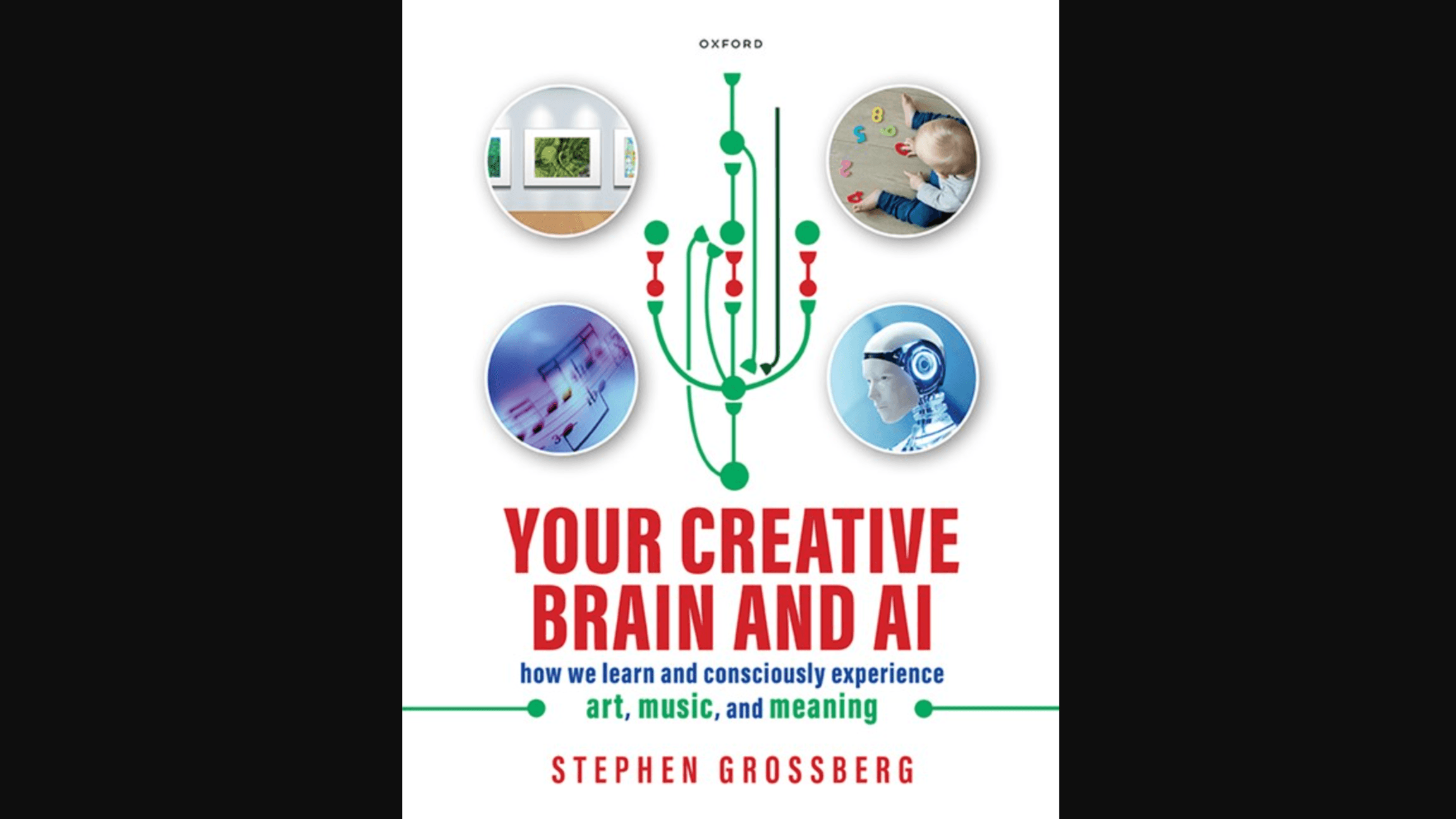
This book examines how neural processes support the perception and creation of visual art, sculpture, musical melodies, lyrics, and language meaning. Using computational models of biological intelligence, it connects attention, learning, memory, prediction, and conscious experience while contrasting human cognition with deep learning and generative AI.
Oxford Academic
DOI: 10.1093/9780198965367.001.0001
Posted bySarah Pearl
Pending staff verification
Notify
Abstract/Description
This book examines how neural processes support the perception, learning, and conscious experience of visual art, sculpture, music, language, and meaning. It uses computational models of biological intelligence to explain how attention, memory, prediction, and learning interact when people recognize images, interpret artistic structure, perform melodies and lyrics, and understand language.
The discussion of visual art analyzes paintings by thirteen artists through models of vision, object recognition, perceptual organization, depth, boundaries, color, and conscious seeing. The book connects features of the paintings with proposed neural mechanisms and the artists’ aesthetic methods and intentions.
Its discussion of music considers how the brain attends to, learns, remembers, and performs melodies and lyrics with changing rhythms and beats. The language section addresses how children connect words and sentences with objects, actions, and events, allowing language to acquire meaning through experience.
The book also compares biological intelligence with deep learning and generative artificial intelligence. Grossberg argues that some current AI systems do not adequately model the adaptive, context-sensitive learning processes of human brains. He presents adaptive resonance and related neural network models as explanations for how people learn new information without rapidly losing established knowledge.
The account is based primarily on Grossberg’s theoretical and computational research. It provides a detailed neuroscientific framework for examining aesthetic perception and musical learning, while its broader claims about consciousness and future AI should be understood as part of the author’s specific scientific theory.
The discussion of visual art analyzes paintings by thirteen artists through models of vision, object recognition, perceptual organization, depth, boundaries, color, and conscious seeing. The book connects features of the paintings with proposed neural mechanisms and the artists’ aesthetic methods and intentions.
Its discussion of music considers how the brain attends to, learns, remembers, and performs melodies and lyrics with changing rhythms and beats. The language section addresses how children connect words and sentences with objects, actions, and events, allowing language to acquire meaning through experience.
The book also compares biological intelligence with deep learning and generative artificial intelligence. Grossberg argues that some current AI systems do not adequately model the adaptive, context-sensitive learning processes of human brains. He presents adaptive resonance and related neural network models as explanations for how people learn new information without rapidly losing established knowledge.
The account is based primarily on Grossberg’s theoretical and computational research. It provides a detailed neuroscientific framework for examining aesthetic perception and musical learning, while its broader claims about consciousness and future AI should be understood as part of the author’s specific scientific theory.