Bethany Smith
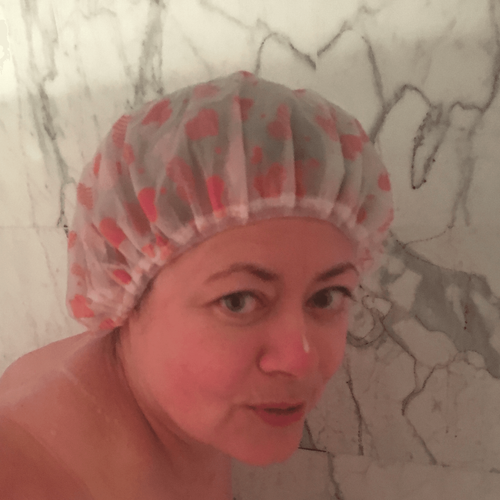
I love helping others engage in and explore the connection between pareidolia and creativity, and I've tried to do this through my artwork.
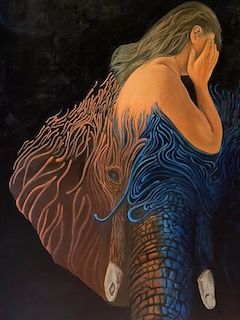
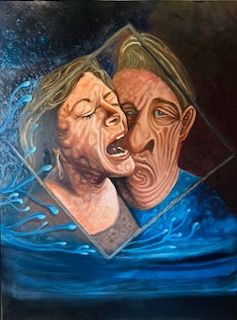
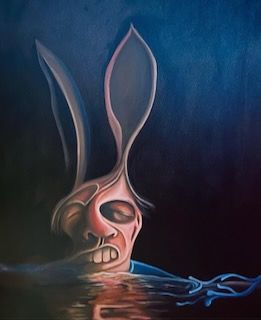
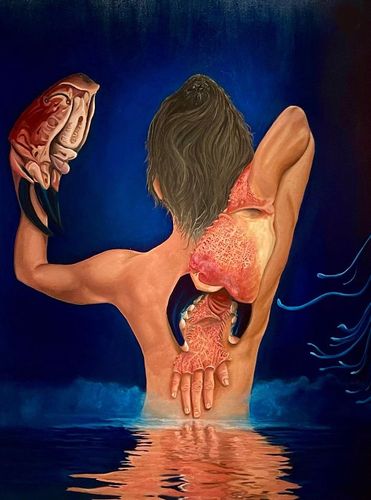
My current series of oil paintings are inspired by the marble vein patterns in my shower tiles. I leverage my ability to find somewhat human figures in these random patterns and bring them to life and create unique characters with individual personalities.
Have you ever looked at a cloud and thought you saw an animal, or looked at a wood grain pattern and thought you saw a face? If so, you were experiencing pareidolia (Per-î-dõl-ya) the term used to describe why we see identifiable forms, faces and meaningful images in random or ambiguous visual patterns. I use pareidolia as a resource, creating paintings of rabbits, bugs, people with abnormal features, and mythological creatures, all from my shower!
My work focuses on how to get what I see in the tiles onto the canvas, turning marble veins into surreal figures. They are characters in a fantastical world each with their own stories. When I show people the pattern in the marble, then the sketch on top of it, and then the painting (based on the pattern), their faces light up and they ask me to return to the pattern and walk them through it again. As a result of showing my work in this way, I've received many images in email and text from people who now see patterns. Some will even draw on top of the image and share that with me as well. I've found this to be a wonderful experience, and I believe using pareidolia as a basis for my work and sharing that with others can help viewers interpret ideas in new ways, be more imaginative and perceptive, and create moments of happiness.
In my first exhibition, I showed many of the resulting paintings and created a replica of the shower as part of the exhibit. The marble tiles were scanned, printed and placed into the structure, and I used invisible ink to outline the patterns that formed the characters that I saw for each painting. I invited attendees to view the pencil sketches and then search for the characters in the tiles. If they couldn't find them, they could use a black light to illuminate the invisible ink and reveal the characters. Watching this interaction and seeing their expressions when they saw the final paintings in the exhibit made me realize that this is about so much more than just looking at the finished work--I had invited the viewers to participate in the experience of viewing a pattern in nature and turning it into a piece of art.
My goal is to bring this to a much larger audience in a setting like a museum that supports brain science linked to the arts.
Interests
I’m interested in how pareidolia might help all people to see, draw, and make art - not just people labeled as “artists”. I’m also interested in how the use of pareidolia could inspire alternative teaching methods and help people feel more comfortable exploring more about making and viewing art.