Common Threads Project
Common Threads Project helps individuals and communities heal from the enduring psychological effects of sexual and gender-based violence, war, and displacement. We offer an innovative, evidence-based trauma healing method that combines neuroscience, art, psychoeducation and somatic technique. We build local therapists’ capacity, strengthen support systems, and further the field of trauma therapy.
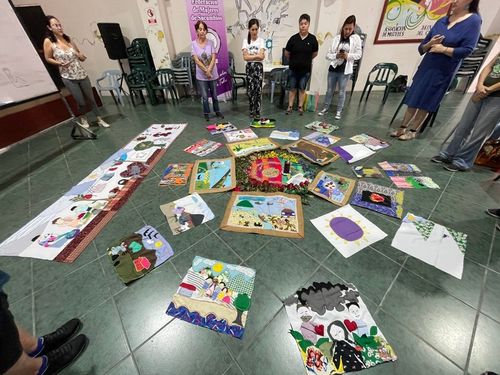
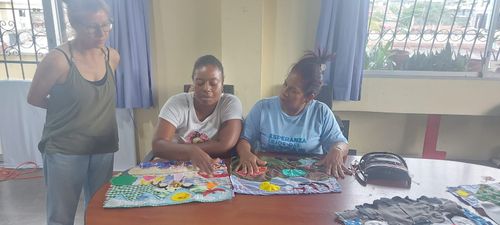
Common Threads Project’s (CTP) mission is to help individuals and communities to heal from the enduring psychological effects of sexual and gender-based violence (SGBV). We offer an innovative, evidence-based trauma healing method that combines neuroscience with a culturally responsive art approach, whereby survivors depict their experiences in story cloths, often stories too difficult to put into words. Through artmaking, psychoeducation, somatic techniques, and group therapy, participants process traumatic experiences, build resilience, and deepen social connections.
Our goals are:
* Expand access to trauma therapy: We build local capacity for trauma healing through partnerships with organizations that provide holistic care for SGBV survivors and train their mental health specialists in our model of therapy. Over time, partners become local Centers of Excellence and train other providers in their area.
* Build expert capacity for mental health professionals: Partner organizations’ mental health staff embed this approach into their professional “toolkit.” They develop strong expertise in facilitating the group intervention and become prepared to offer this program to future cohorts of survivors.
* Provide effective psychological intervention: CTP’s method equips participants with practical skills that facilitate healing and promote survivors’ strengths, coping skills, and social connectedness. It enables survivors to reach their full potential, engage in positive social relationships, and participate in education and the workforce.
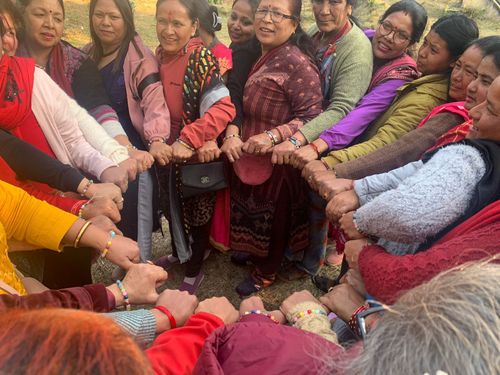
* Strengthen community support systems: CTP’s group therapy fosters peer relationships and safe spaces for shared healing and recovery. We partner with service providers that offer holistic care including shelter, legal aid, and case management and connect survivors to other services.
* Document lessons learned and best practices: CTP collects evidence through evaluation and research to further the field of trauma therapy.
Programs & Activities
Common Threads Project Methodology
Our approach to therapy combines evidence-based group psychotherapy techniques with the creation of story cloths. It is informed by neurobiological research, which demonstrates that trauma lives in the body, in the sensorimotor system, as a result of automatic survival responses. We address trauma initially in non-verbal and somatic work, creating a context of emotional safety in which to overcome the residual effects of traumatic experience. Once they have the skills to manage strong emotional responses, participants describe experiences in textile form to begin the complex work of trauma processing.
The Common Threads Project trauma healing model of therapy, or CTP Methodology, is a core purpose of CTP and central to all our program activities. It is a model of group psychotherapy designed specifically for survivors of sexual and gender-based violence. It was envisaged by CTP founder Dr. Rachel Cohen, then further developed in collaboration with CTP key senior faculty members and adjusted to cultural and local contexts by CTP partner organizations.
Our clinical faculty train and supervise local mental health providers in the CTP Methodology. These providers work within partner organizations that serve survivors of sexual and gender-based violence and provide an array of holistic services to them. After the training, clinicians become facilitators, forming CTP healing circles of 12-15 participants and implement group trauma therapy sessions over the period of 3-6 months. The facilitators continue to be closely supervised and mentored by CTP for the first few rounds of intervention. Participants of the intervention will progress through four phases of stepped recovery.
What are story cloths?
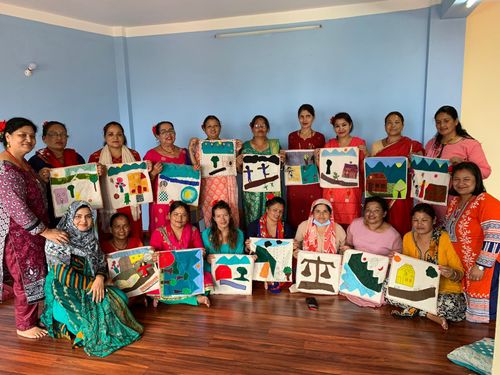
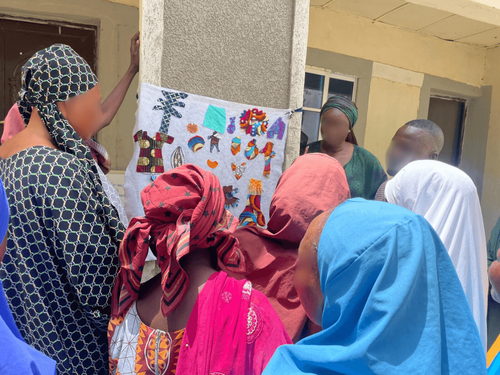
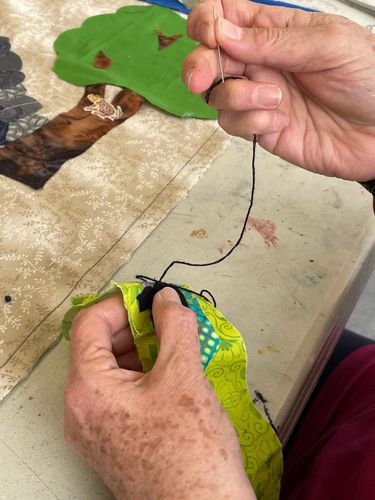
Story cloths are an ancient practice found in diverse settings. In a safe and supportive environment, women come together to sew stories that may be difficult to express in words into cloth. The repetitive nature of sewing regulates the body’s responses, while depicting their story in imagery encourages non-verbal self-expression.
Where We Work
Since 2012, CTP has provided transformative trauma therapy to over 1,100 survivors in 22 locations across Latin America, Africa, Asia, Europe, and US immigrant communities. More than 250 clinicians have been trained, extending impact to over 3,000 family members. Evaluations show statistically significant decreases in depression, anxiety, and trauma symptoms. Survivors report improved health, social functioning, and capacity for leadership.
Our work in Nepal exemplifies how our initial training and ongoing support to partners helps pave the path for increasing access to CTP’s trauma therapy. In 2014, we started work in Nepal, training 10 local practitioners on CTP’s healing circles method for refugees. By 2022, the local team began their own organization, Sajha Dhago, becoming CTP’s first Center of Excellence, taking full leadership of the program.