Grazia Pulvirenti

Grazia Pulvirenti is Professor of German Literature at the University of Catania and former Visiting Professor at UCL and the Warburg Institute. With Renata Gambino she developed neurohermeneutics, a transdisciplinary approach bridging literature, the arts and the neurosciences. She explores neuroaesthetics, embodied cognition and the role of the arts in wellbeing and cultural welfare.
Grazia Pulvirenti is Professor of German Literature in the Department of Humanities at the University of Catania. She has been a visiting professor at University College London and a visiting fellow at the Warburg Institute in London. She received her PhD from the University of Vienna.
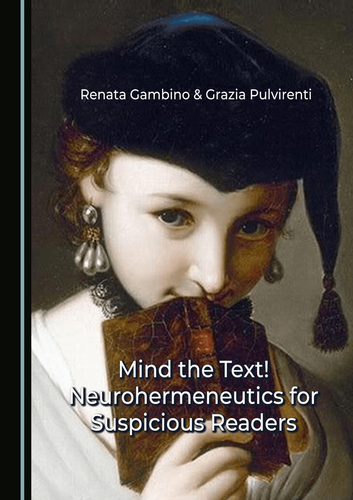
Her research connects the humanities with the cognitive sciences and neurosciences. Together with Renata Gambino she developed neurohermeneutics, a transdisciplinary approach that combines close reading with findings on embodiment, emotion and imagination. It asks how literary and artistic works engage the mind-brain, and how those works can in turn refine scientific models of aesthetic experience. Their books include Mind the Text! Neurohermeneutics for Suspicious Readers (Cambridge Scholars, 2024) and La mente narrativa di Heinrich von Kleist (2018), which won the L’Iguana Prize.
She directed the interdepartmental research centre NEWHUMS – Neurocognitive and Humanities Studies at the University of Catania. She co-directed the International Network for Neurohumanities Studies, whose NHS Dialogues brought leading researchers in neuroaesthetics and cognitive poetics to Catania. She sits on the steering committee of Cognitive Futures in the Humanities and took part in the European COST Action E-READ on the evolution of reading. She has led several funded research projects, including the Creative Europe project EMPACT.
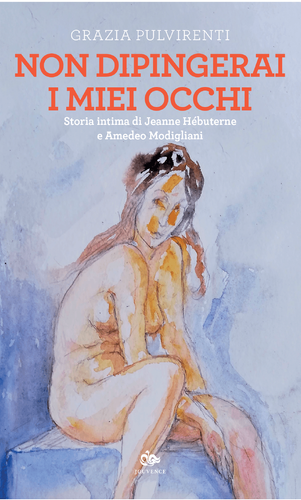
She is increasingly engaged with the arts’ contribution to health and cultural welfare, including social prescribing in clinical practice, and teaches in postgraduate programmes on neuroaesthetics and cultural welfare. She is also a novelist: Non dipingerai i miei occhi, an intimate story of Jeanne Hébuterne and Amedeo Modigliani, won the Premio Anna Maria Ortese and was nominated for the Premio Strega.
Interests
Neuroaesthetics · Neurohermeneutics · Cognitive poetics · Embodied cognition · Imagination and creativity · Emotion and empathy in aesthetic experience · Ekphrasis and visual culture · The sublime · Performativity and theatre · Literary reading · Arts, health and cultural welfare · German and Austrian literature and culture · Kleist, Hofmannsthal, Goethe · Eighteenth-century and Romantic aesthetics · Aby Warburg