Jason Snell

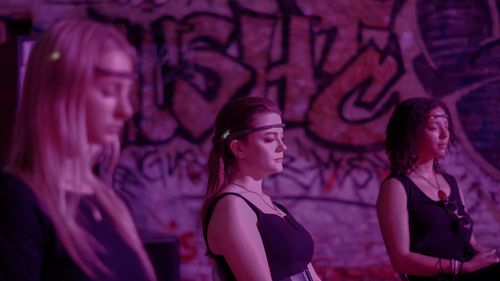
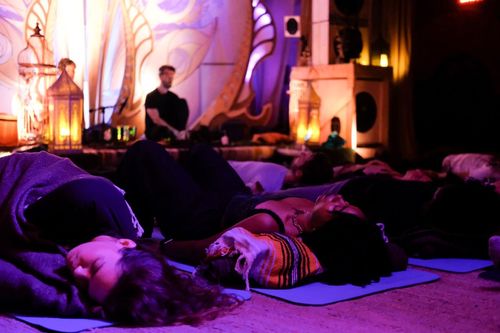
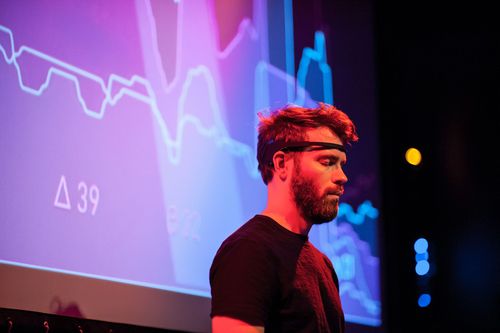
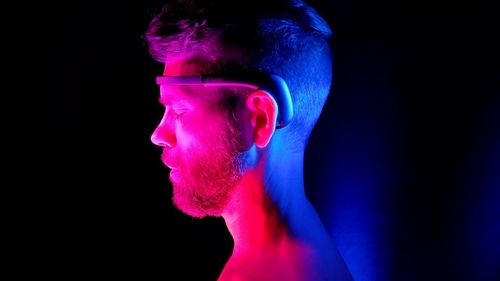
Jason Snell is an electronic musician, meditator, and programmer who uses biosensors and musical neurofeedback to explore vulnerability and altered states. With a Master’s from NYU, he’s performed and presented globally, taught at Tisch, and collaborates with NYU and UCLA on neurofeedback research. His work bridges art, science, and education.
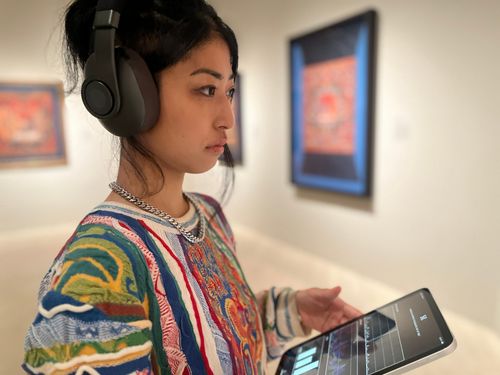
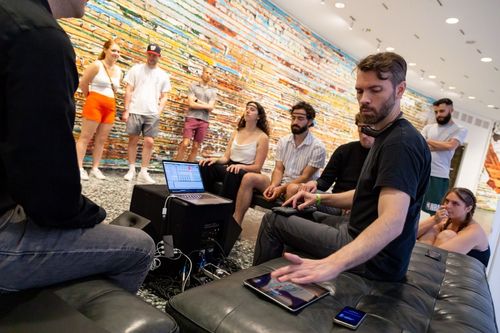
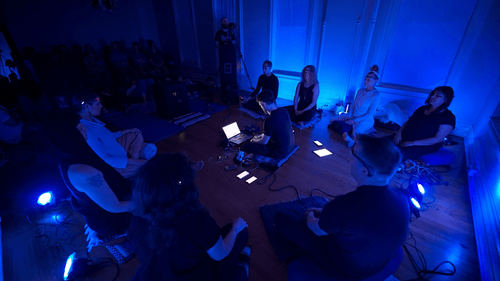
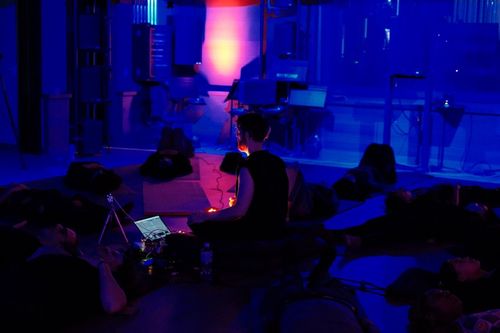
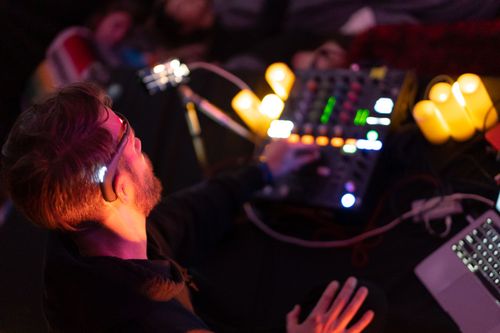
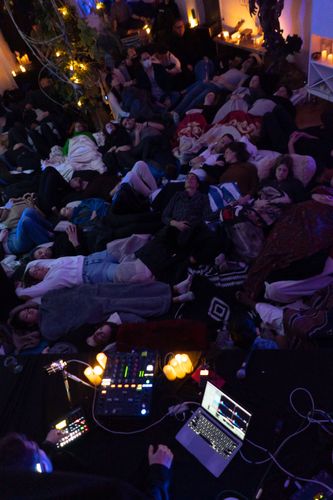
As an electronic musician, meditator, and computer programmer since the mid-1990s, Jason Snell uses biosensors and musical neurofeedback loops to explore themes of vulnerability, entrainment, and transcendent mental states. He has presented this work at the Metropolitan Museum of Art, the Smithsonian Hirshhorn, MIT, the Imperial College London, and the University of Europe in Berlin.
He earned a Master's in Interactive Media Studies from NYU in 2023, with studies spanning New York, Berlin, and Shanghai. He’s taught electronic music classes at NYU Tisch and is conducting musical neurofeedback research in collaboration with the NYU Department of Psychology and UCLA. His thesis work involved developing biofeedback soundscapes designed to guide the brain into creative, subconscious states of mind.
His music career, spanning almost three decades, includes over 180 performances, 16 albums, 33 EPs and singles, and appearances on 45 compilation albums, along with several film scores.
He has received over $185,000 in art and innovation grants and awards and has worked extensively with public arts and STEM programs in K-12 schools, creating interactive media and musical neurofeedback curricula.
Interests
Musical neurofeedback, sonification, and biometric art; real-time signal processing and audiovisual mapping; human-computer interaction; EEG and biometric data interpretation; sound-based interventions for wellness, education, and immersive art; collaborative research with NYU and UCLA on neurofeedback’s effects; experimental electronic music; adaptive sound design in hospitality and museum contexts.