Lyn Godley
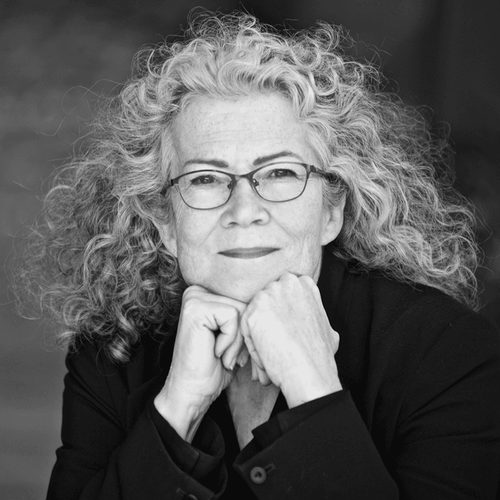
For more than five decades, Lyn Godley's work has explored how our experience of the visual world shapes human experience. Her immersive paintings extend painting through projected light, creating works that unfold through changing visual relationships while engaging in research on perception, mood, and the experience of time. She founded the Jefferson Center for Immersive Arts for Health.
For more than five decades, my work has explored how our experience of the visual world shapes human experience. Although the media have expanded—from painting and design to architectural light, immersive environments, and interdisciplinary research—the underlying inquiry has remained remarkably consistent: how changing visual relationships influence the way we experience ourselves, one another, and the environments we inhabit.
Beginning as a painter and later co-founding the internationally recognized design studio Godley-Schwan, I have crossed the boundaries of fine art, product design, furniture, lighting, and environmental design. It is represented in museum collections, including the Museum of Modern Art, the Museum of Arts and Design, the Brooklyn Museum, MUDE Design Museum, and the Philadelphia Museum of Art.
My current practice extends painting through projected light, working with painting, light, rhythm, and time as interconnected artistic media. Rather than composing a sequence of images, I compose changing visual relationships that unfold gradually through time. The work asks not to be interpreted, but inhabited.
Questions that first emerged through studio practice naturally expanded into collaborations with neuroscientists, psychologists, physicians, architects, and designers. These collaborations led to the founding of the Jefferson Center for Immersive Arts for Health at Thomas Jefferson University, where artists and researchers investigated how slowly changing visual environments influence attention, mood, and the experience of time.
Interests
I’m interested in the ways art, design, and technology can be integrated to support health and emotional well-being. My work explores light as both material and metaphor—linking research in neuroscience and psychology with immersive, contemplative environments that invite calm, curiosity, and connection. I am interested in how painting, light, rhythm, and time shape human experience. My work explores these questions through immersive visual environments, while interdisciplinary collaborations investigate their relationships to perception, temporal experience, emotion, and well-being. I welcome collaborations with researchers and practitioners in neuroscience, psychology, music, architecture, environmental design, and related fields who share an interest in how artistic experience can deepen our understanding of what it means to be human.