Community Guest Blog Post: Shubham Chopra
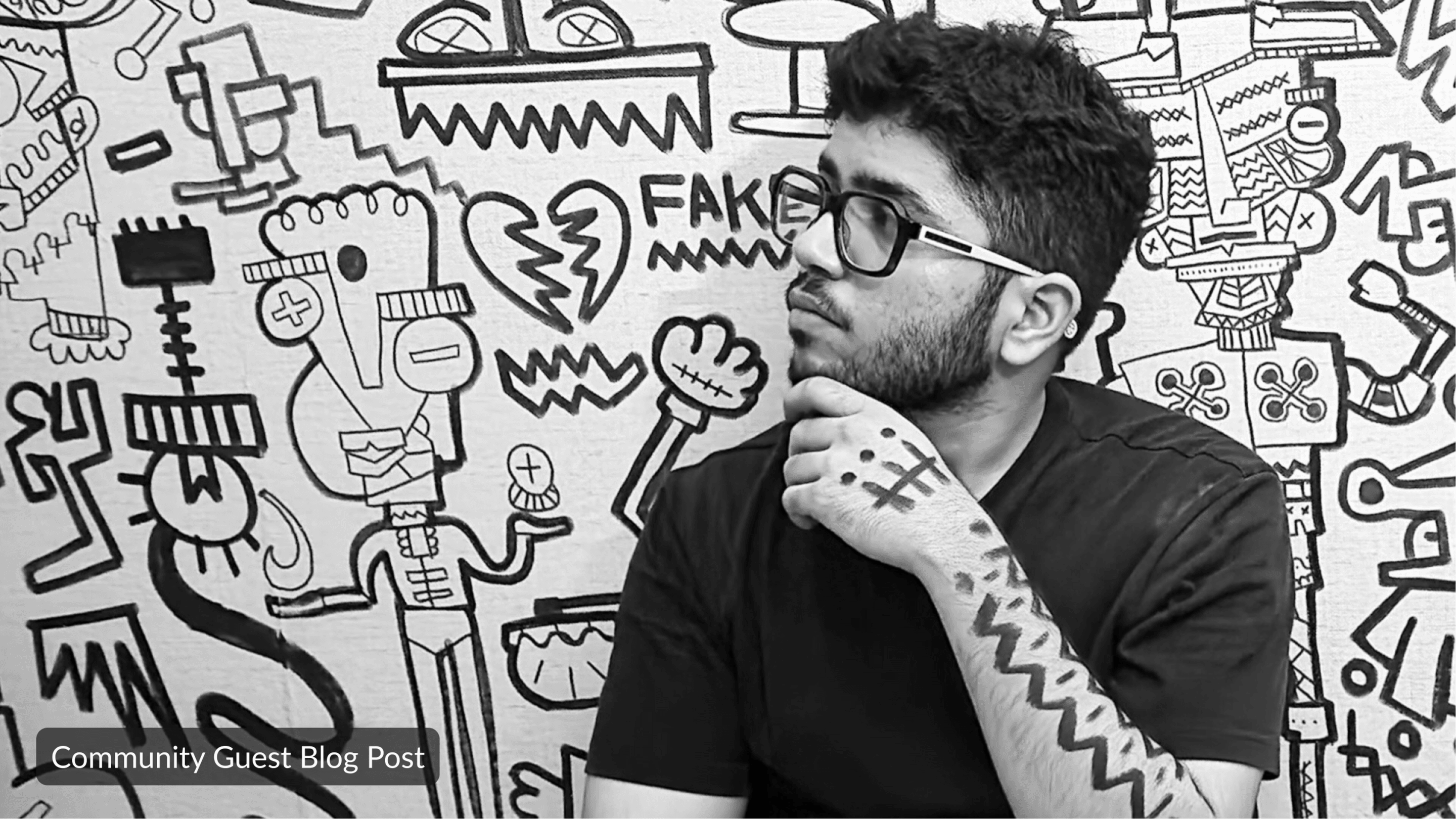
Every November, many people begin preparing for the year’s end, tying loose threads, organizing work, creating year-end lists. For me, November turned into something else entirely: a month-long experiment in patience, neuroplasticity, and the quiet, stabilizing power of a daily creative ritual. What began as a simple LinkedIn hashtag, #AnArtworkADay, slowly expanded into a public health awareness initiative and a grassroots fundraising effort for the future explorations of the 10x10feet Arts & Health Lab.
Across these thirty artworks, the thread running through everything is simple: creativity is not an accessory to health; it is an active ingredient.
A Ritual That Started as a Breath
Each artwork I create begins long before the pen touches paper. The ritual is part meditation, part technique, and part surrender. I begin by settling into a comfortable seat, letting the body soften into stillness. Meditation music becomes the auditory scaffolding for the mind. I fill the ink tank, clean the nib to remove excess flow, and then something physiological happens: breath slows, attention steadies, the nervous system begins its descent from the busy surface to a quieter layer underneath.
Only then do I let the pen begin its wandering.
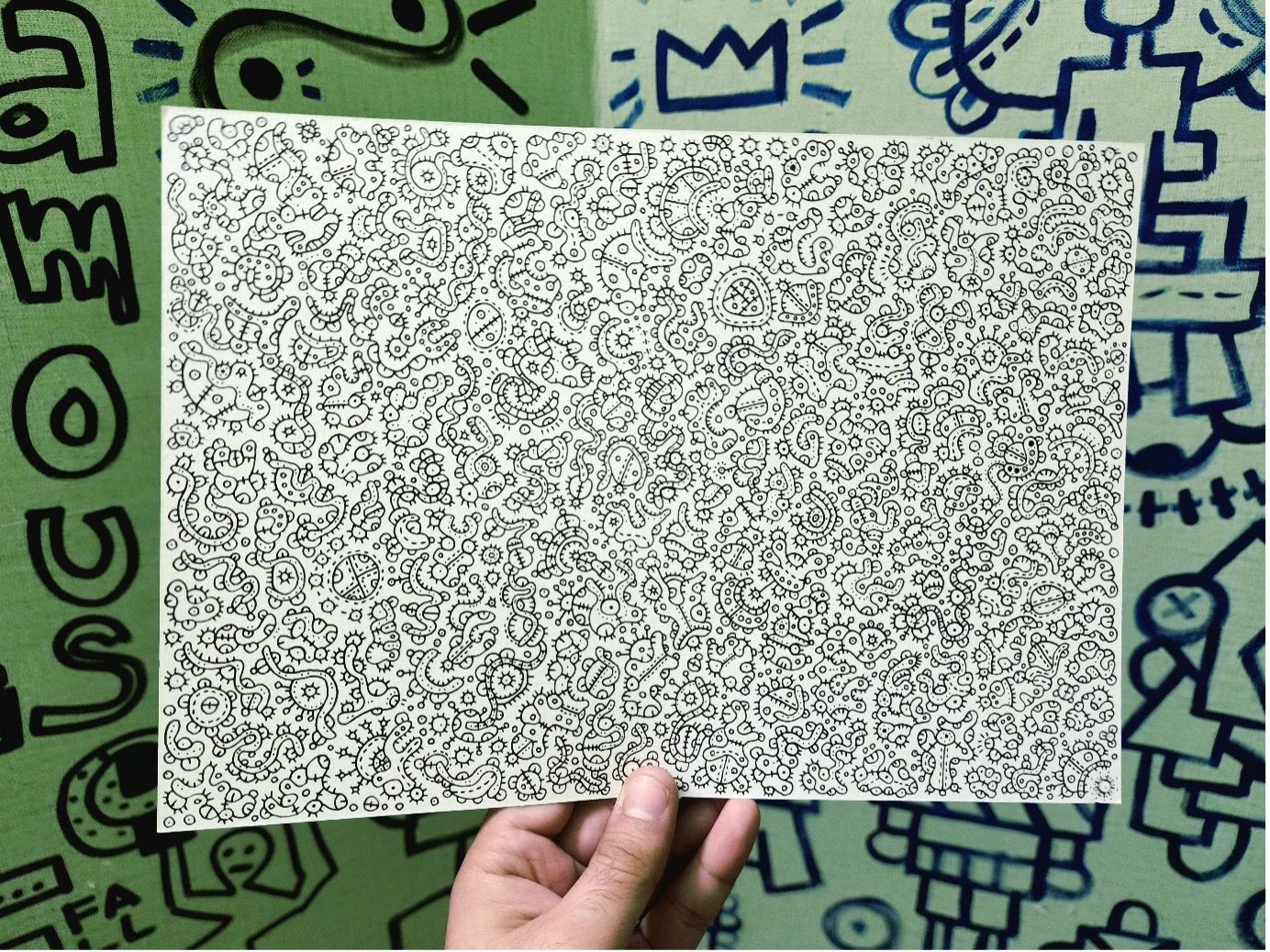
The marks that emerge, tiny molecular forms, swirling entities, curious microbial shapes, are not planned. They are navigated. I call this practice Flow Art, because the movement feels less like drawing and more like channelling. The paper becomes a map of thoughts dissolving into motion.
These small forms, repeated hundreds of times, are inspired by invisible particles, the unnoticed molecules suspended in the air around us. They represent the quiet complexity of our inner and outer environments, always present yet rarely perceived. In some way, they mirror the mind’s own microscopic storms and calms.
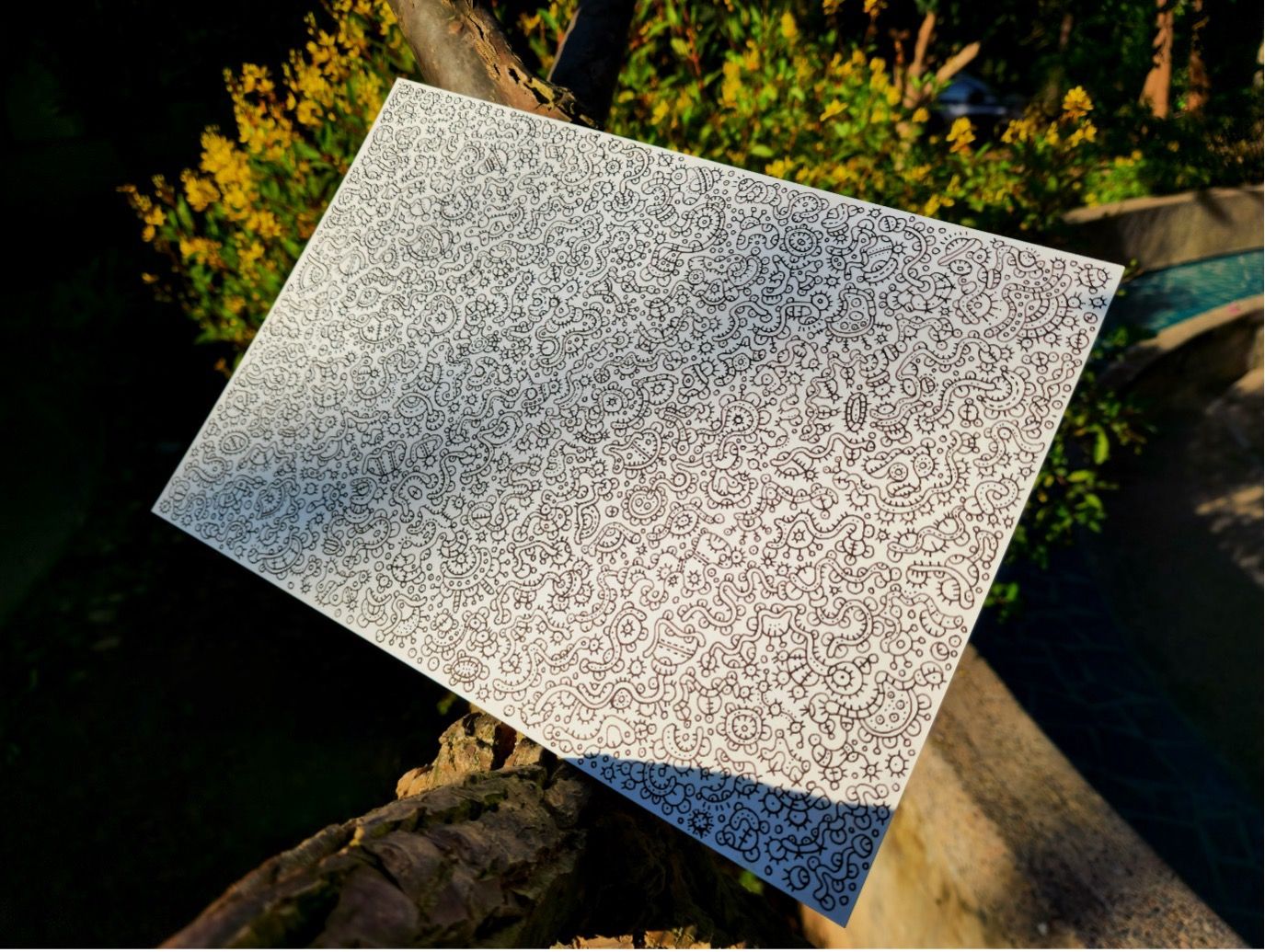 Artwork 8/30 – Flow Art created during the November ritual.
Daily Art as a Regulating Practice
What fascinates me most about this month-long journey is the way repetition reshapes experience. Neuroscience has long emphasized that consistent creative engagement strengthens attention systems, stabilizes mood networks, supports emotional regulation, and enhances cognitive flexibility. But the lived experience of this is something else entirely.
By the second week, the ritual stopped feeling like a task and began behaving like a home base.
By the third week, the drawings felt like an exhale my brain had been waiting for.
By the end of the month, the daily artwork became a mental tuning fork, bringing coherence back into the day.
People often imagine creativity as a spark of inspiration. I’m learning it can also be a pulse. A slow, rhythmic, stabilizing pulse.
From Hashtag to Mission
#AnArtworkADay began as a personal discipline experiment. But as I posted these pieces on LinkedIn, messages began arriving, people saying the drawings made them pause, breathe, think differently, feel calmer. Others expressed curiosity about the relationship between creative ritual and mental well-being. Slowly, what started as a self-contained practice became a public conversation.
That conversation is now becoming a mission.
The November series doubled as an awareness initiative and a fundraiser to support the Arts & Health Lab’s next phase of research and prototyping. We are preparing to deepen our evidence-building around how creative habits influence stress recovery, attentional stability, and emotional processing. These thirty drawings are, in a way, our first public field notes.
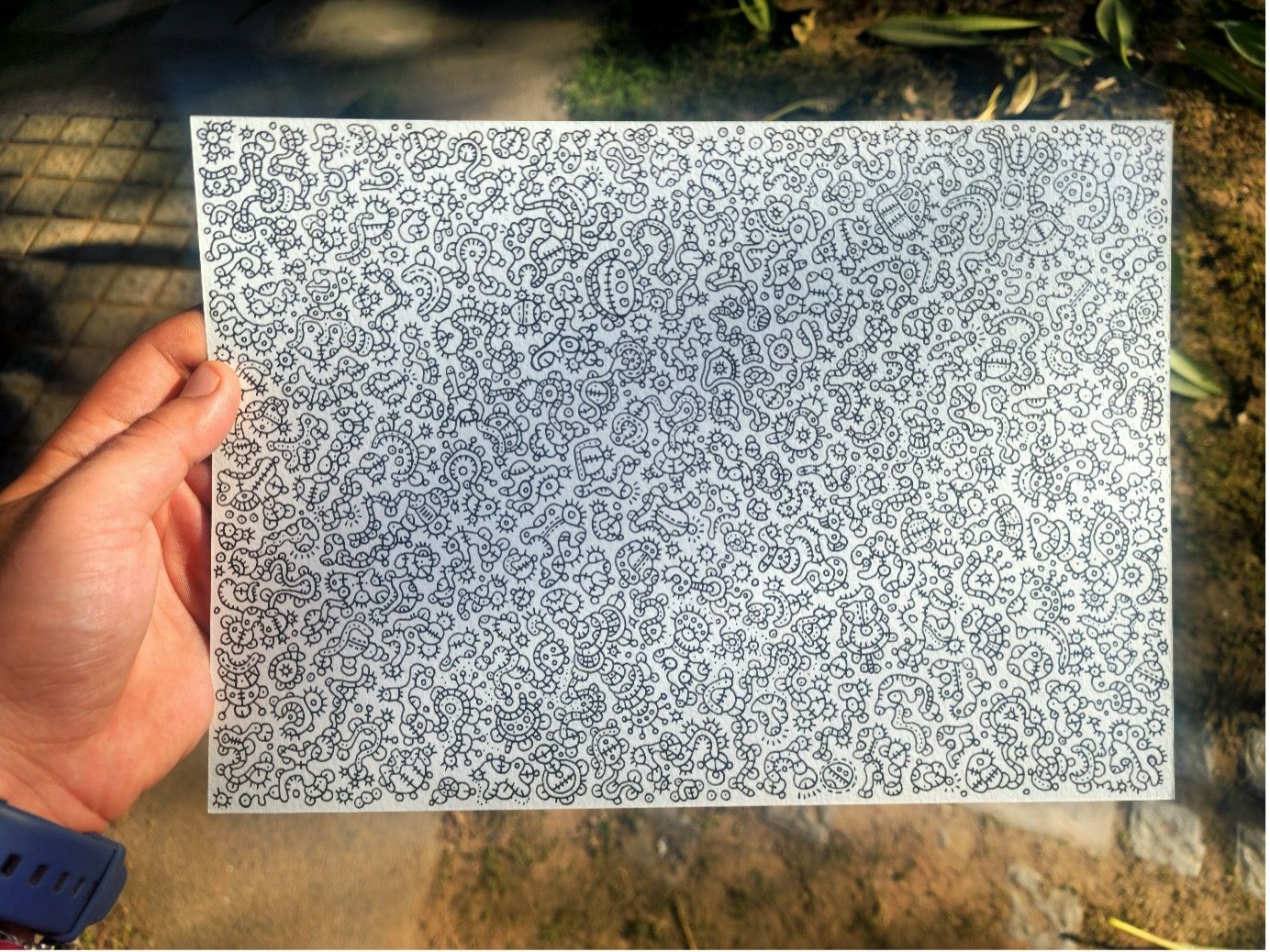 Artwork 24/30. The density of detail mirrors the density of thoughts, settling through repetition.
How this Connects to the Neuroarts Movement
Neuroarts is a remarkably generous field. It doesn’t belong to any single discipline, it lives at the intersection of science, art, public health, psychology, community practice, and lived experience. The growing conversation, facilitated by communities like the Neuroarts Resource Center, has already opened doors. It has given language to things artists intuitively know: that creativity is a regulator, a connecting force, a biological process, and a social one.
My hope is that #AnArtworkADay becomes an accessible gateway for people who’ve forgotten how to make space for creativity. Thirty artworks in November revealed to me how small daily gestures can add up to large inner shifts. If even a few people find their way back to creative practice through this initiative, it will already have served a meaningful purpose.
 Artwork 30/30. Flow Art outdoors: light, breath, and movement converging.
Where We Go Next
10x10feet Arts & Health Lab is preparing for new explorations, tools, environments, and interventions that help people reconnect with their creative nervous systems. Your engagement with this work directly fuels that growth.
I invite you to join this movement by:
• Following or contributing to #AnArtworkADay on LinkedIn
• Sharing neuroarts resources with communities who need them
• Engaging with organizations like the Neuroarts Resource Center who are shaping the infrastructure of this field
• Supporting the Lab’s ongoing work as we build accessible creative-health solutions
Creativity is a public health tool waiting to be recognized as such. Let’s bring it out of the shadows and into everyday life.