Guest Blog Post: Kinda Studios
Applied Neuroaesthetics: The Art (and Science) of Translation
The burgeoning field of neuroarts has reached a critical inflection point. Decades of empirical research now confirm what creative practitioners have long understood intuitively: artistic and aesthetic experiences measurably alter human physiology, brain function, and behavioral patterns. However, a persistent challenge remains at the center of our community: how do we translate isolated laboratory findings into scalable, cross-industry applications that advance public health and wellbeing?
The full maturation of the neuroarts ecosystem requires dismantling institutional silos and bridging different professions. Creative practitioners require rigorous scientific frameworks to validate the therapeutic mechanisms of their work, while researchers require innovative creative ideas to translate data into accessible, human experiences.
At Kinda Studios, we operate at this juncture as a specialised neuroaesthetics studio and lab. Our work focuses on translation - bridging the gap between rigorous scientific insight and applied creative execution, establishing a cohesive framework where neuroscience data is contextualised and applied for real-world impact.
Our studio is the engine of our work, consulting on, and creating beautiful experiences which centre expansive states of being, such as improved interoceptive awareness, enhanced social connection and evoking aesthetic emotions like awe and wonder. Our lab then translates the impact of this work to help evidence how scientifically designed products and experiences affect health and wellbeing outcomes.
By operating as a translator between these domains, Kinda aims to accelerate this integration of arts and science, transforming our cultural and civic spaces into sites of healing and connection.
Kinda’s Dual Impact Model
Our work functions as a dual-loop system designed to serve both macro-scientific inquiry and micro-human connection:
- The Macro Loop (Collective Insights): We leverage wearable technology to capture continuous, real-world biometric datasets at scale, giving academia and industry large datasets mapping emotion, cognition and behaviour in real-world settings.
- The Micro Loop (Reflective Data): Collective and individual insights are then shared back with audiences and participants as beautiful, interactive, and playable environments or experiences of art. This reflective method of communicating data insights offers people a non-judgmental mirror to explore their physiology and health.
Our project with the Barbican, Your Inner Symphony part of the Feel the Sound exhibition beautifully illustrates this dual impact model. The piece was designed to investigate interoception, the conscious awareness of internal bodily signals and an indicator for wider emotional regulation and mental wellbeing. The work aimed to:
- show audiences how sonic experiences shift physiology
- explore the role experiential space has on the body
- help people connect to their bodies within an artistic environment
The installation produced a dataset of over 25,000 data points. Initial findings from 10% of the dataset show Feel the Sound yielded a 5-7% down-regulation in heart rate from baseline entry to exit across the cohort, suggesting a calming experience. The piece also offered a reflective and playable data execution, each person’s physiological response was turned into a piece of art. The art provides a visual language helping people to discuss their emotions, something many people find difficult.
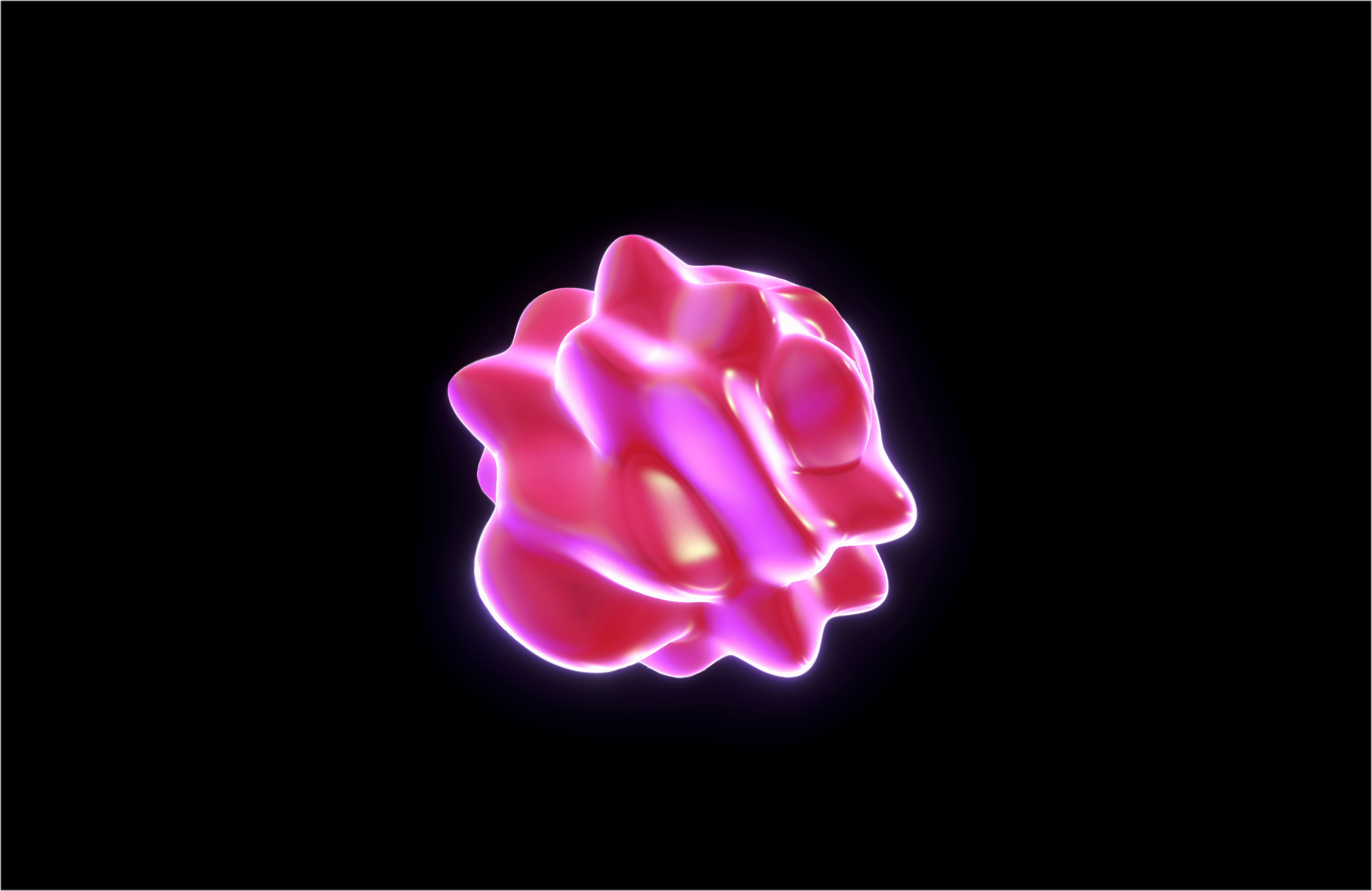 Your Inner Symphony ‘orb’ showing audiences’ responses to the Feel The Sound exhibition, Barbican, London 2025. The image shown is of an interactive orb which moved in line with Heart Rate, Heart Rate Variability and Galvanic Skin Response.
Another example of reflective data in action comes from our public engagement work, supporting people to reflect upon and notice their emotional states. Utilising EEG data we created EVE: The EEG Visualiser of Emotions. Many people are disconnected from their emotional experience and EVE offers a playful and non-judgemental way to see how our emotional experience changes moment to moment. Our system uses the Arousal-Valance model of emotions to map EEG signatures into dynamic, colourful artwork. This real-time reflective data set offers a bold way to visualise and understand emotional experience. The technology is offered as a reflexive, collaborative exchange with the individual. It places no judgement on expected or ‘good’ emotions, it does not offer graphs or data points. It offers a place to explore your relationship with technology, your relationship to your environment, your relationship to yourself. EVE uses the power of aesthetics to help people attune to their bodies and inner worlds, gaining clarity, self-knowledge and critical thought.
 EVE, uses EEG to drive real-time visuals where pinks and orange colours map to high arousal emotions like excitement or anxiety and where blues and greens map to low arousal emotions like calmness or boredom.
 From treatment to prevention: new models of care
These methods of data collection and visualisation are important societally. Many health care systems, including the NHS, are shifting to preventative models of care. It’s here that arts and culture has a significant role to play; creative executions are beneficial for our health and through data collection we’re able to better tailor experiences to support a broader range of individuals with differing needs.
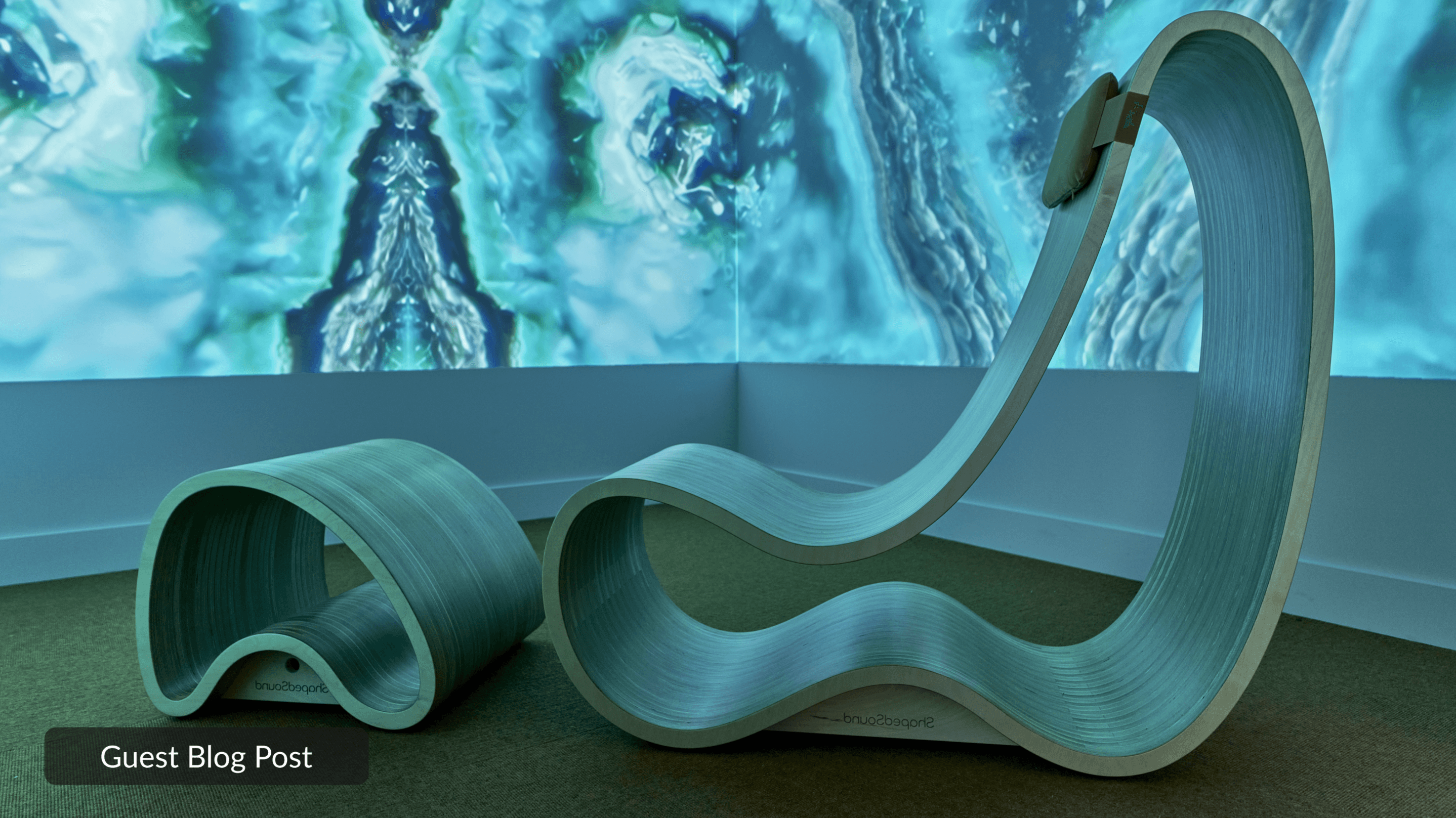
Emergence, Kinda’s personalised, multisensory immersive experience was designed with specific wellbeing aims. The piece sought to help audiences access expanded awareness, to shift into more relaxed states and gain creative insight. The 30-minute guided audio, visual, and tactile journey offered audiences a variety of audio visual stimuli which shifted based on EEG signatures for preference and relaxation. The experience deliberately included some more ‘activating’ audio and visuals, and some more ‘calming’ scenes. Yet we know that not all people respond the same way to supposedly relaxing content. The personalised experience, tailored the experience to show more of those scenes that were coded as ‘relaxing and engaging’ by our technology, thereby creating a memorable and attuned immersive experience.
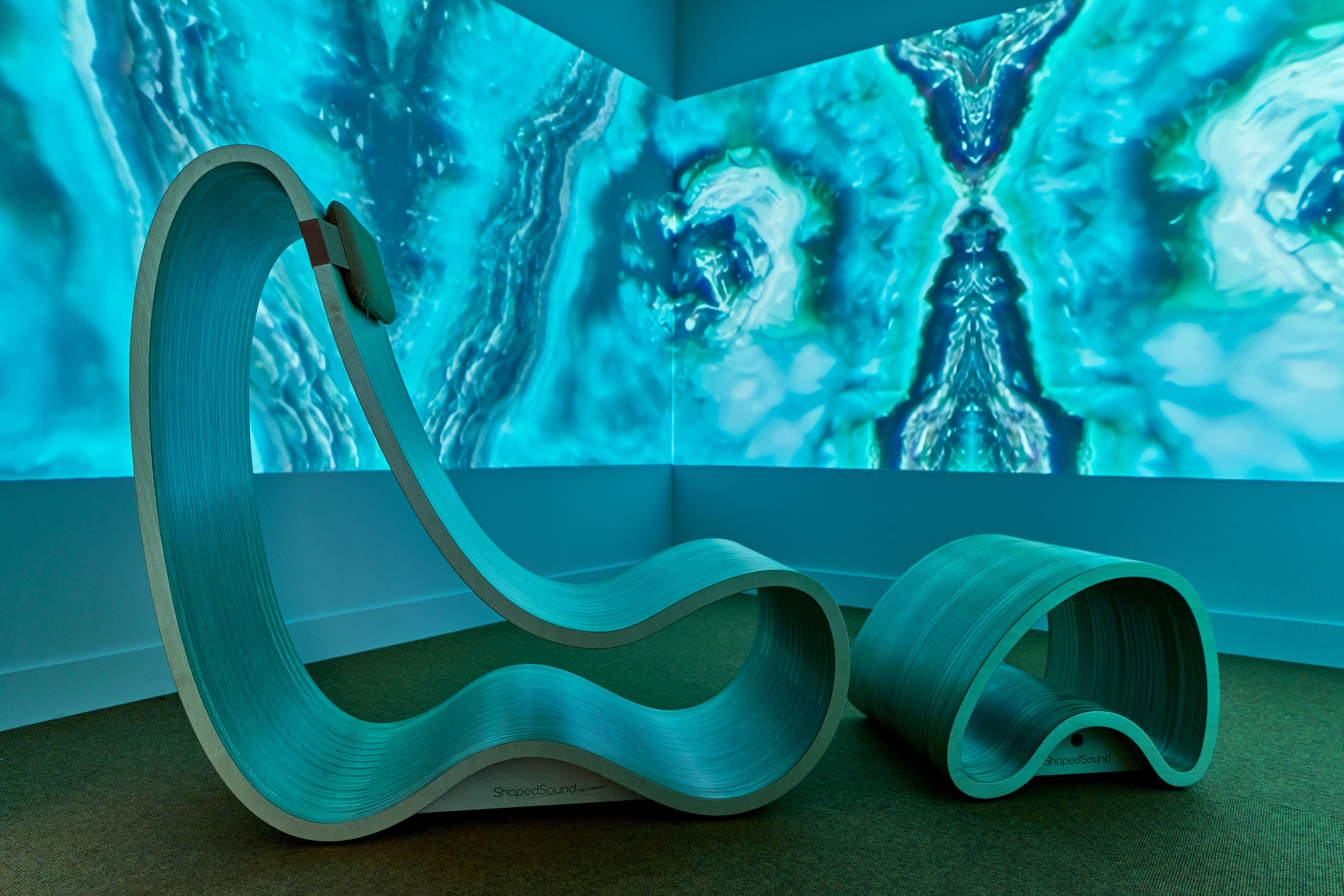 Emergence at 113 Spring, New York. Visitors lie back in the vibroaccoustic ‘SonaForm’ chair and have a personalised journey based on their EEG feedback.
Arts and cultural experiences and civic spaces can deliver improved health and wellbeing impacts when designed with intentionality and attention to a range of audience needs. Better understanding of the health outcomes associated with arts and cultural experiences can support health care services with their preventative agenda and in turn benefit a broader range of communities. Immersive, neuro-responsive digital technologies present a powerful, scalable framework for preventative care, leveraging biofeedback loops to regulate the autonomic nervous system before stress and anxiety become chronic or acute problems to treat.
The art and science of this translatory, applied work is burgeoning, we welcome connections from far and wide in supporting our mission to nurture a healthier more connected society.