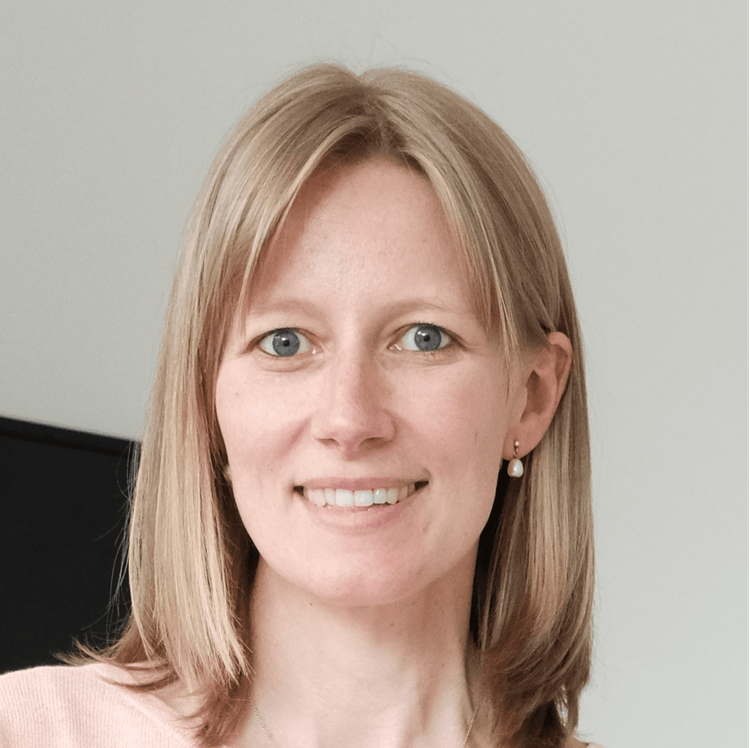
Voices from the Field: Daisy Fancourt
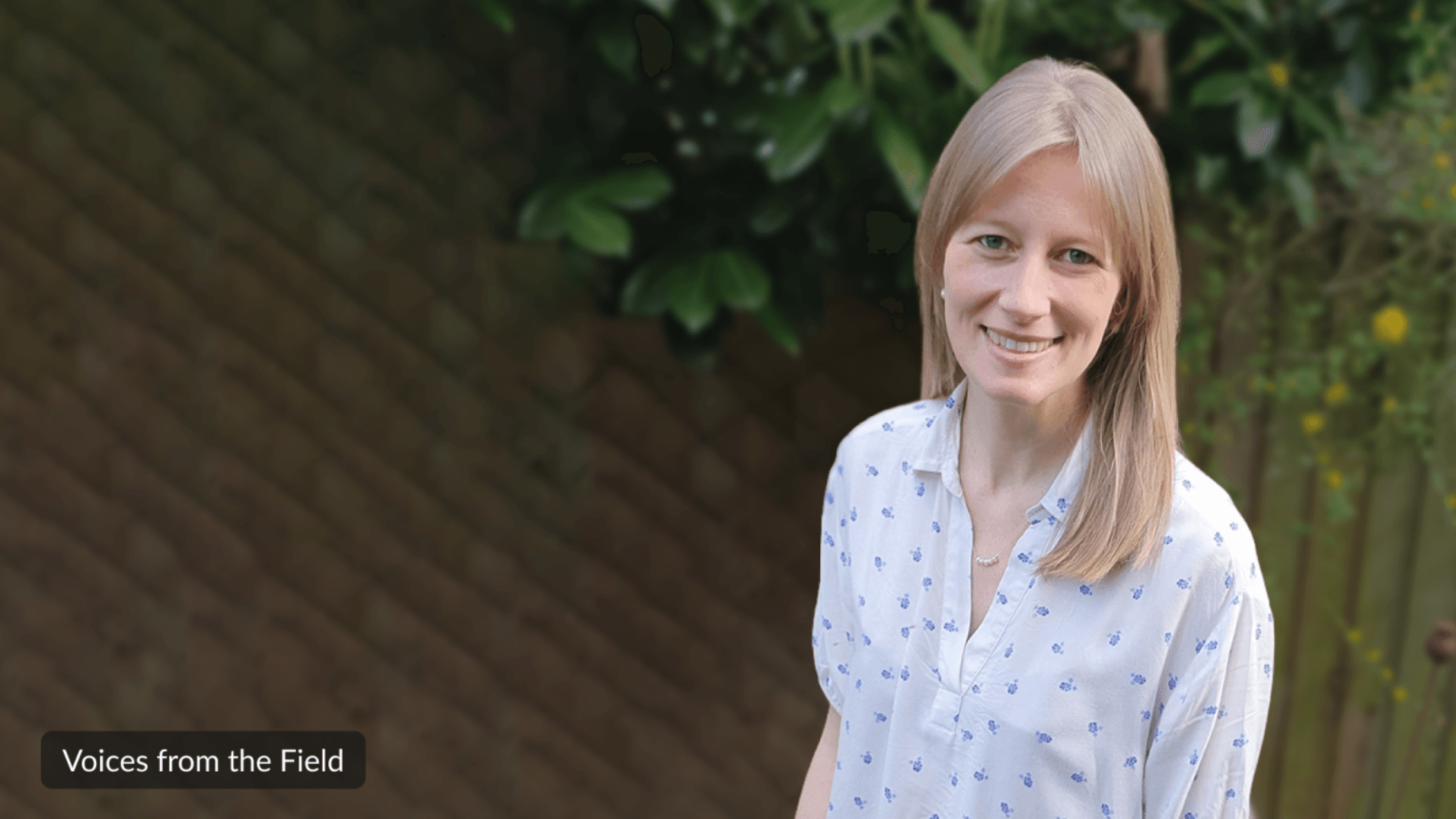
What first inspired you to explore the connection between the arts, health, and/or science?
I feel so lucky as I grew up in a family of musicians, and I thought I would head down that route myself. I actually started my career working as a professional pianist. But then I got an incredible job working on arts programmes within hospitals and it was transformative for me. I saw first-hand the impact that the arts had on patients and their relatives, and I was absolutely captivated. I wanted to understand how and why the arts were capable of influencing people’s minds, brains, bodies and behaviours. So, I retrained as a scientist and I now lead a research group of over 30 scientists at University College London where we work on clinical trials, laboratory experiments and big data analyses about the health impact of the arts. We’re the WHO’s Collaborating Centre on Arts and Health, so we collaborate with teams working in this space internationally.
In your view, what makes the arts and aesthetic experiences uniquely powerful tools for advancing health and wellbeing—and how does your work contribute to translating that potential into practice?
The arts are multimodal activities – they engage multiple sensory systems at once, they provide cognitive challenge and stimulation, they expose us to new ways of thinking and new ideas, they engage a wide range of brain regions simultaneously and build new neural connections between these brain regions, they have deep seated physiological effects across our multiple different biological systems in our bodies, they reach us emotionally and help us work through our feelings, they connect us to one another and help us build connections and cohesion, and they help us move and connect with our bodies. I describe all of these effects and many more in my latest book Art Cure. My research is focused on identifying and quantifying these effects so that we can appreciate the full depths of the impacts the arts have on us and on our health.
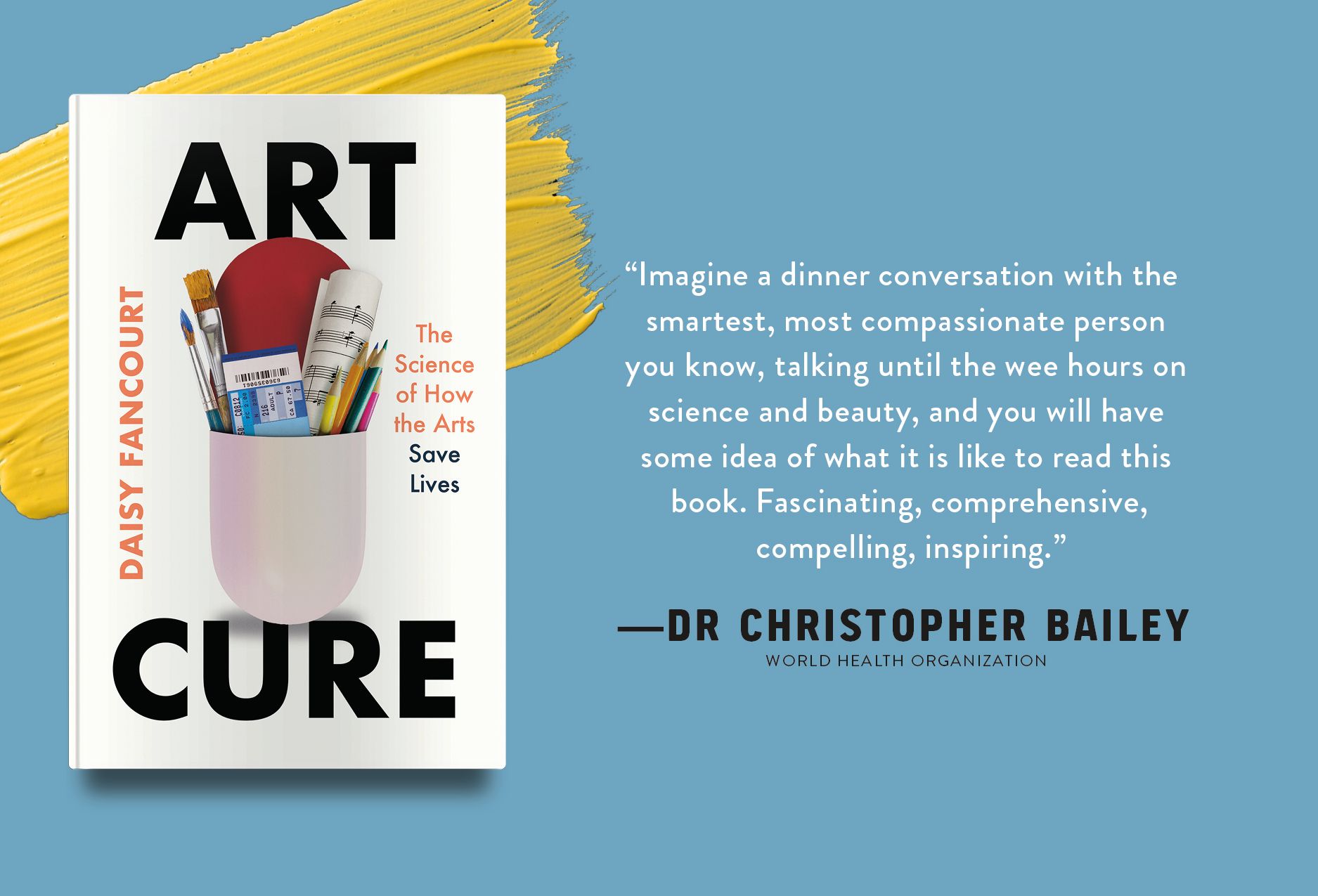 Daisy Fancourt's new book, Art Cure: The Science of How the Arts Save Lives is a groundbreaking exposé showing how the arts—alongside diet, sleep, exercise and nature—are the forgotten fifth pillar of health
What challenges do you see in building a more cohesive and equitable neuroarts ecosystem?
There is an elephant in the room when it comes to arts. Arts sectors in the US, UK and a number of other countries have been suffering enormously. In the closing chapters of Art Cure, I call this out, giving examples of funding cuts, closure of arts organisations, deprioritisation of arts in schools, and increasingly challenging and precarious working conditions for artists. This is all impacting heavily on our own abilities to engage in, and benefit from, the arts. In the US, only 1 in 20 adults engages in the arts on a typical day. Rates of reading for pleasure are at the lowest levels in over 40 years (since records on people’s reading behaviours began). And there is enormous inequity in patterns of arts engagement – race, wealth, and where people live all influence whether people are able to access the arts or not. We need to be talking about this issue more. Because if we really want an ecosystem that will support people’s engagement with the arts and ultimately enhance their health, we have to ensure that the arts are accessible for everyone, everywhere.
What kinds of support, collaboration, or infrastructure would most help you expand and/or scale your work? What are existing resources that you have found most useful?
My work is personally focused on big data. My team and I analyse data from national cohort datasets that track people’s arts engagement and their health outcomes over decades of their lives. We have been doing this work in the UK and the US for nearly a decade now, and it has revealed remarkable things, like how engagement in the arts reduces people’s risk of developing future depression, chronic pain, frailty, and dementia and enhances their lifelong wellbeing. Now, we are working to take the work global. We’ve recently accessed longitudinal data from over 50 countries worldwide, and we’re using the data to understand how investing in arts within communities influences public health and also produces financial returns on investment for governments. Big data infrastructure that supports the gathering of data on people’s arts behaviours alongside other biomedical, neuroimaging, psychological and behavioural data is pivotal to being able to go much further into understanding how our arts engagement influences our health at the deepest levels.
Looking ahead, what is one bold idea or hope that you have for the future of neuroarts?
In Art Cure I describe what I call the “seatbelt moment” - pivot points that have redefined how people think about, value and engage with specific behaviours. One of the most memorable and marked was seatbelts - in the 1990s, after decades of scientific research and grassroots campaigning, seatbelts in cars suddenly (finally) became mandatory. We’ve seen similar major shifts in public attitudes towards other health behaviours like exercise, diet, sleep, nature. The growth of interest we’re seeing in arts and health at the moment is, I believe, a sign that we’re heading into that “seatbelt moment” for the arts. I actually think 2026 could be that year - a year for us to celebrate the value the arts bring to us as individuals and societies, to recognise and acknowledge the incredible contributions that artists, arts organisations and arts venues make to our societies, and a reminder to ourselves about the importance of prioritising the arts in our own lives.