Nada Yoga, the Yoga of Sound
November 12th, 2025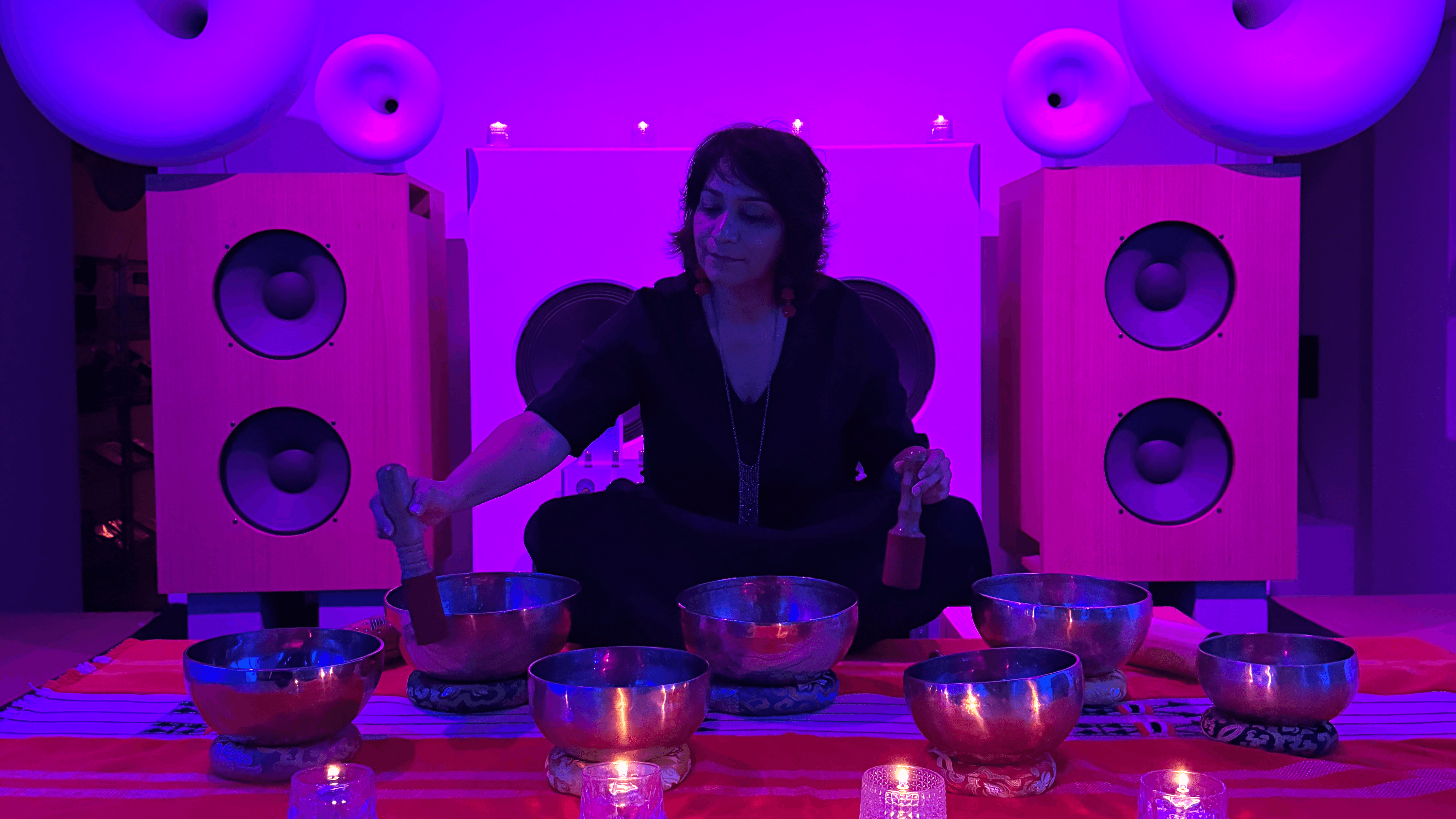
Sound is often the first sense we develop and the last to fade. It has the power to soothe, to awaken, and to transform. In sound healing, we return to this primal connection—using vibration to move from the external to the internal, from noise to stillness, and from separation to wholeness.
This is the essence of Nada Yoga (Naad Yog), or Sound Yoga. Nada Yoga is divided into two aspects: Ahata (external sounds), which refers to the sounds we hear—like chanting, instruments, or music—and Anahata (internal sounds), the subtler, silent vibrations of our own awareness.
To clarify further, Ahata, a struck or audible sound that is perceived through our external senses, specifically, our ears.
Anahata, unstruck or silent, internal vibrations of the self that are considered sacred and personal.
The sounds used in sound healing are examples of Ahata Nada - external, “struck” sounds such as playing Tibetan singing bowls, chimes, or gongs. These audible sounds are a starting point to help you: refine focus, shift awareness inward, cultivate deep listening, and achieve calmness. They serve as a tool to eventually access our Anahata Nada, the deep, internal, sound cultivated in advance of meditative shifts.
Sound healing combined with Yoga Nidra (Yogic Sleep) creates a state of trance-like sleep where the body is in a state of consciousness between waking and sleeping. Yoga Nidra takes us inward. When I lead sessions, I make everyone aware that they might end up snoring or hear someone around them snore. Just let go.
When we can let go, surrender to the sound, stillness, and breath, we can go inwards and slow down. A sound healing session combined with Yoga Nidra reduces anxiety, promotes better sleep, and enhances self-awareness, along with energizing and improving your mood.
Moving from external sounds to internal sound awareness is a journey. As humans, we hold our fears, worries, joys, and responsibilities close. We carry them on our shoulders, in our neck and jaw, and throughout the body—each of us in different ways, depending on our physiology. We also forget to breathe. Breath keeps us alive, yet the kind of breathing that carries us through the day is different from the intentional breathing that centers and grounds us. That kind of breath does not come as easily as we might hope.
The simple act of closing our eyes immediately disconnects us from the external.
Taking a few deep cleansing breaths brings awareness to our current state of being.
Lying down signals a shift—from doing to surrendering.
When we combine all three of these actions in a sound healing session, we open ourselves to both the external sounds and the inner vibrations that help us slow down and attune to our internal rhythms.
Science is still catching up to understanding how sound heals, but the current research is promising. A review of 400 published scientific articles on music as medicine found strong evidence that music has mental and physical health benefits in improving mood and reducing stress. In fact, rhythm in particular (over melody) can provide physical pain relief. One study published in the Journal of Evidence-Based Integrative Medicine found that an hour-long sound meditation helped people reduce tension, anger, fatigue, anxiety, and depression while increasing a sense of spiritual well-being.
This research mirrors what I witness in my own practice. At the end of each sound healing session, when we sit quietly and reflect, participants share experiences that range from slowing down to falling into deep sleep, from seeing colors to sensing a presence, from becoming emotional to entering deep calm.
As a sound healer, to witness the resonance of my seven Tibetan singing bowls filling the room, to feel the reverberations softening hearts and bodies, is awe-inspiring. Each session is not only a reminder of sound’s profound healing power—it is also a humbling teaching experience.
I'd love to hear from you. Have you experienced a sound bath? Do you have any reflections to share?
Citations:


